
Dissertation
Natural-Dyeing
Numerous manual processes become inevitable with natural dyeing, which requires greater effort and significantly more time making it far less efficient in comparison to synthetic dyeing; however, the unique depth of colors it can produce presents an incomparable appeal.
| Category: | Processing |
|---|
| Date: | 2026.08.26 |
|---|
| Tags: | #fw26 #indigo #naturaldyeing #naturalindigo #visvim #visvimharmoniousprocess |
|---|
That feeling of "non uniformity" is created by the human hand
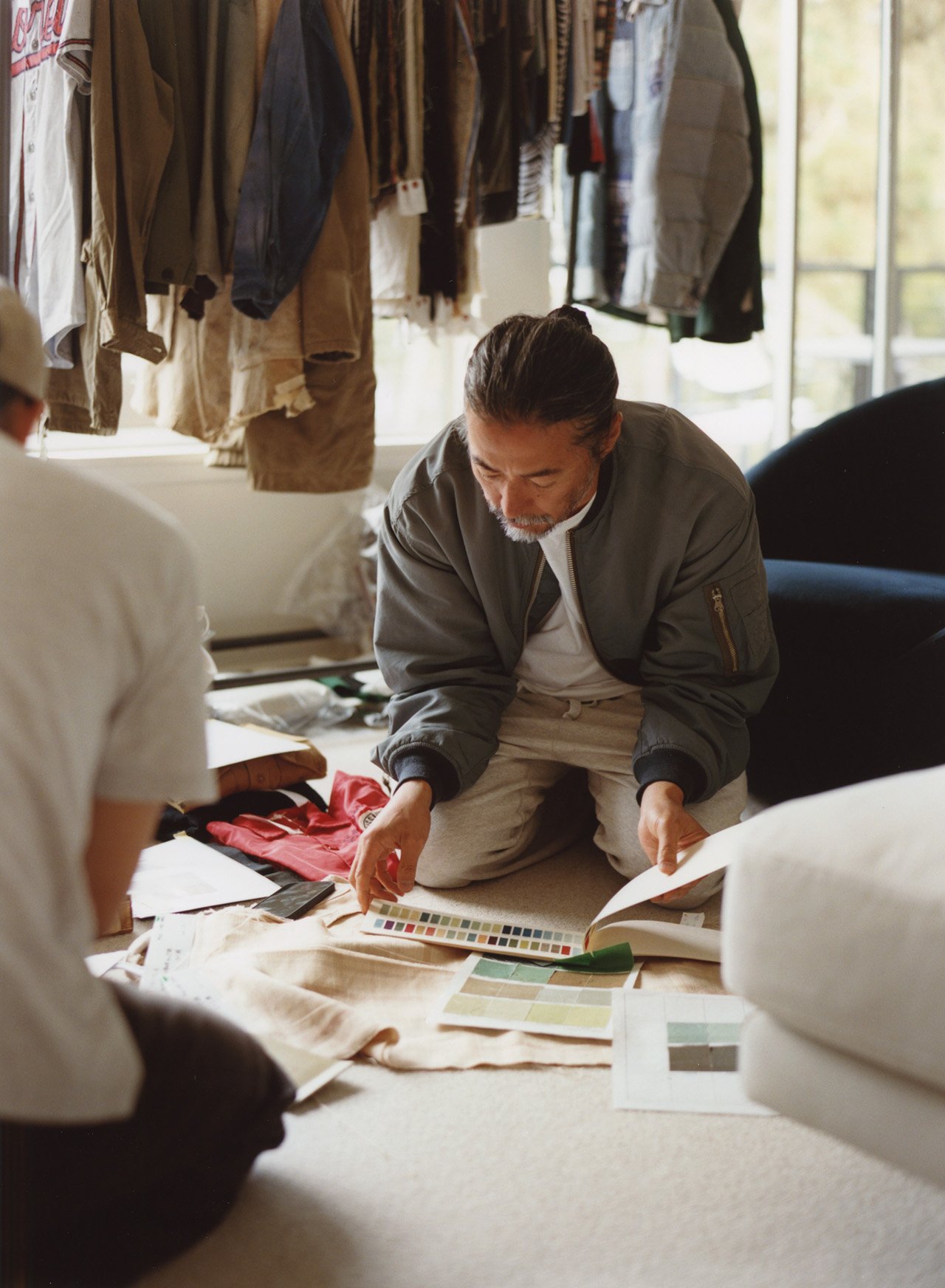
From a young age I was often drawn to things from the past and would find myself picking them up and wondering, "What exactly is the essence of this appeal I feel?" After seeing, touching, and experiencing many things one of the conclusions I arrived at was this feeling of "non uniformity" that was present within each and every thing that I would pick up from the past.
In societies that existed prior to the birth of largescale production, most manufacturing was conducted on a relatively small scale where much of the work was done by hand. Things that are made by humans are not perfectly uniform, unlike many of the products that are created from machine led manufacturing. Not only does it require far more time and effort in comparison to producing with machinery; it also results in subtle variations within each piece being made by having slight irregularities or distortions. While such "individual variations" are often seen as an undesirable outcome in today's landscape where most of the industries in our lives would attempt to limit such elements, I find that these very aspects of unevenness and imperfection present a charm that can truly resonate with ones' heart by representing a more human like "individuality."
Driven by a desire to create such things ourselves, one of the methods we have incorporated as part of our product development for years now is natural dyeing, which is a process that harnesses the power of nature by utilizing plant and animal matter to dye fabrics. Dyeing techniques like "AIZOME" that uses indigo as its raw material to turn fabrics into a rich blue hue, alongside "DOROZOME" or Mud Dyeing that has historically been used to create Oshima Tsumugi, a traditional textile of Amami Oshima. These sorts of natural dyeing techniques were cultivated over a long period of time for many years before the synthetic dyes used for application on most modern products became prevalent. When we develop products and come up with a seasonal color palette, we will often reference old Japanese books that feature the possibilities of colors that can be executed with plantbased dyes. For example, there is an incredible range of variations even among similar shades of yellow and we are always left amazed with the subtle delicacy and abundance of expressions available within traditional Japanese colors. We continue to develop products with the cooperation of the remaining artisans who have inherited this culture of craft and continue to cultivate these age-old techniques by carrying on these traditions in their work.
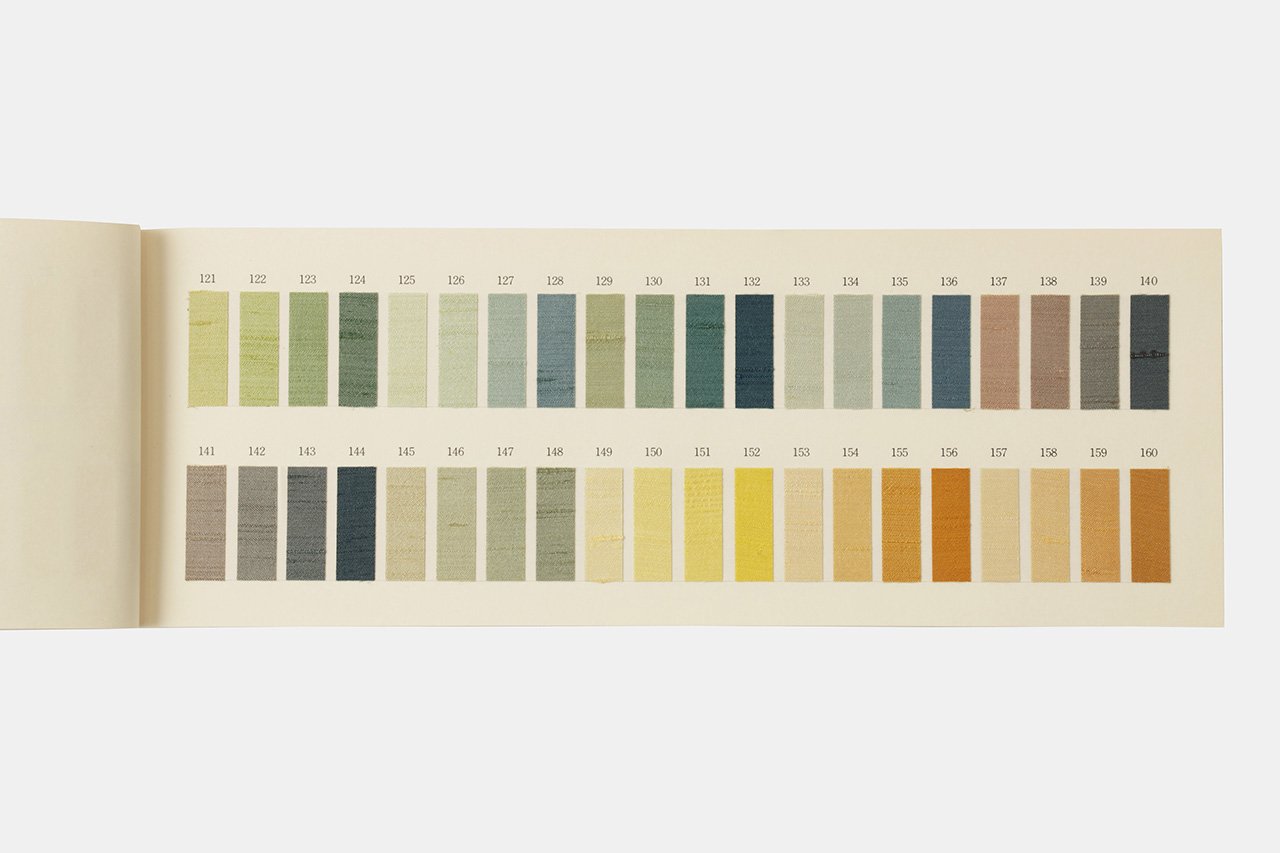
When compared to synthetic dyeing, natural dyes yield a more non uniform finish resulting in subtle variations of the shades that emerge with each color. Each finish can possess a unique hue that presents great depth in its character that is simply difficult to attain with synthetic dyeing. Truth be told, these artisans do not intentionally aim for a non-uniform result; they actually strive to minimize any inconsistencies. However, it is precisely these subtle variations that we seek which emerge naturally from a process that invites the use of human hands. This type of collaborative process can sometimes lead to new discoveries that even a seasoned artisan had never taken notice of in their work before. An example of this would be our suggestion to take a modern sneaker and apply natural dyes to finish them off. New products can come to life when they are created with unprecedented ideas or perspectives. It is a challenge to think of new possibilities, but like the things from the past that inspire us, we hope to create products for today whose appeal can be appreciated even more with the passing of time.
Hiroki Nakamura
Until a soft color with a depth emerges
Dyeing fabrics by utilizing naturally occurring colors--During the 19th century, synthetic dyes were created in Europe through chemical synthesis; however, prior to the rapid spread and adoption of synthetic dyes there was a long history of techniques that had been cultivated all over the world where natural dyes were created with readily available raw materials that included plants such as grass, trees, and flowers, as well as various minerals and shells.
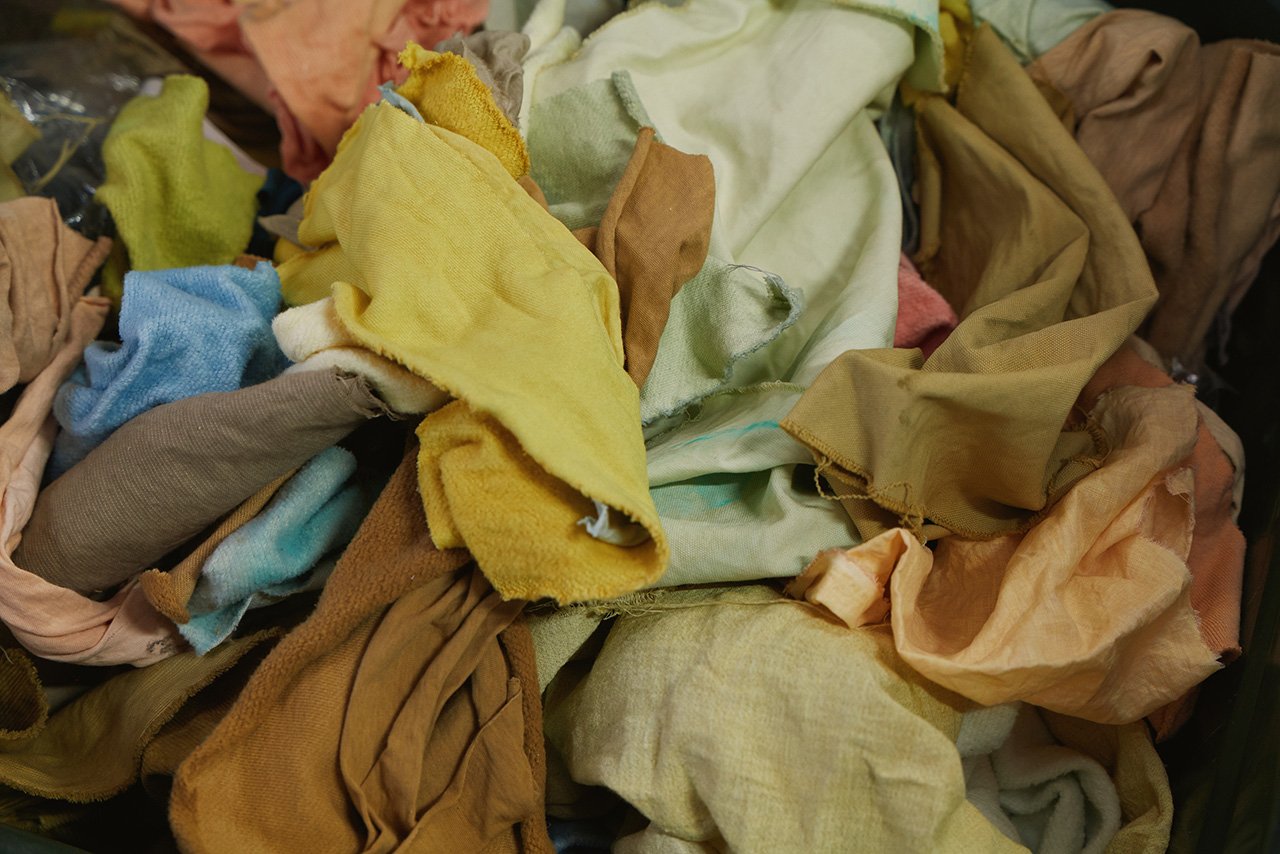
Synthetic dyes consist of chemically stable components that are able to yield a more uniform vivid color that is highly reproducible and resistant to fading, making it more suitable for industrial volume production. In contrast to this, natural dyes offer a more soft, uneven palette of colors that are naturally derived. As each material sourced from nature can possess subtle variations, each and every fabric that is dyed with this method has the ability to produce a unique and complex expression. Also, the color will gradually fade over time due to friction from actual usage where it begins to develop a rich character that becomes even more enhanced with each passing day. Numerous manual processes become inevitable with natural dyeing, which requires greater effort and significantly more time making it far less efficient in comparison to synthetic dyeing; however, the unique depth of colors it can produce presents an incomparable appeal.
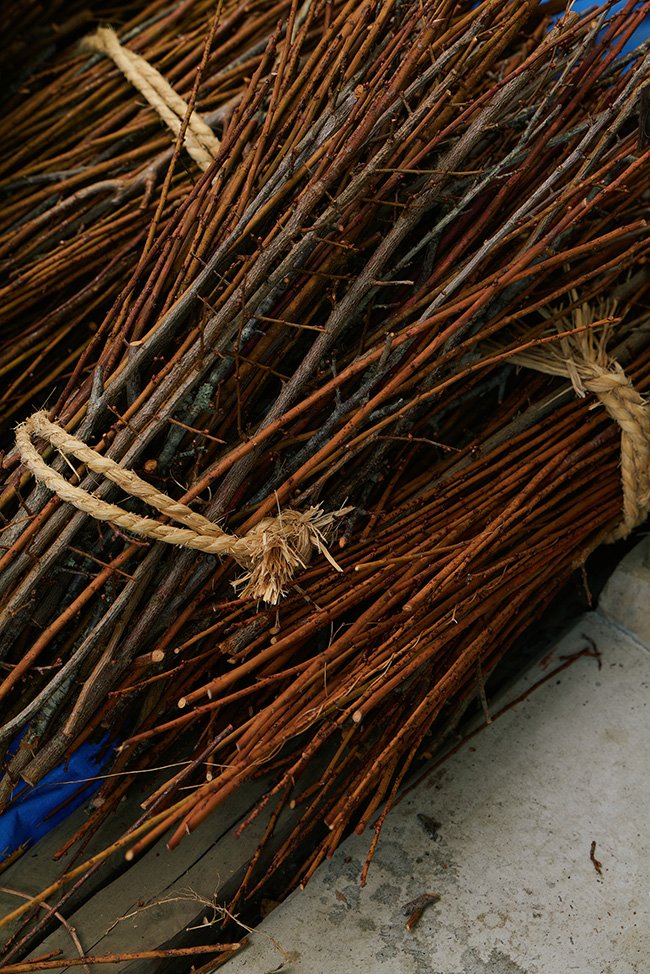
Deciduous tree of the genus Prunus (Rosaceae). For dyeing the branches, bark, and pruned cuttings are boiled and used, rather than the fruit. It contains tannins and transforms into soft shades of pink or beige through the use of a mordant solution. Characterized by a subtle, nuanced color derived from natural sources.
Dye Color : PINK
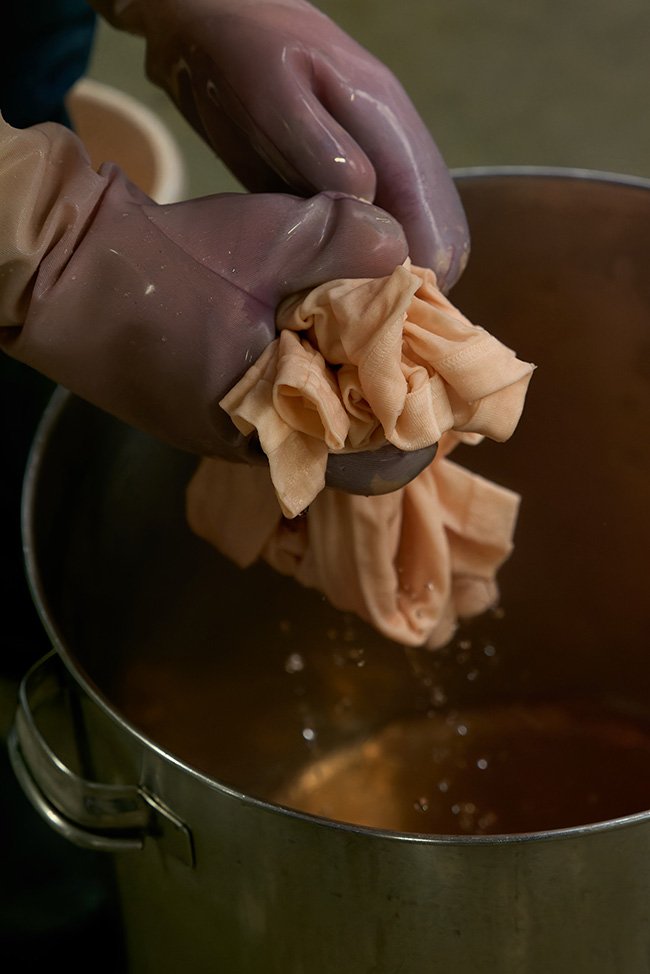
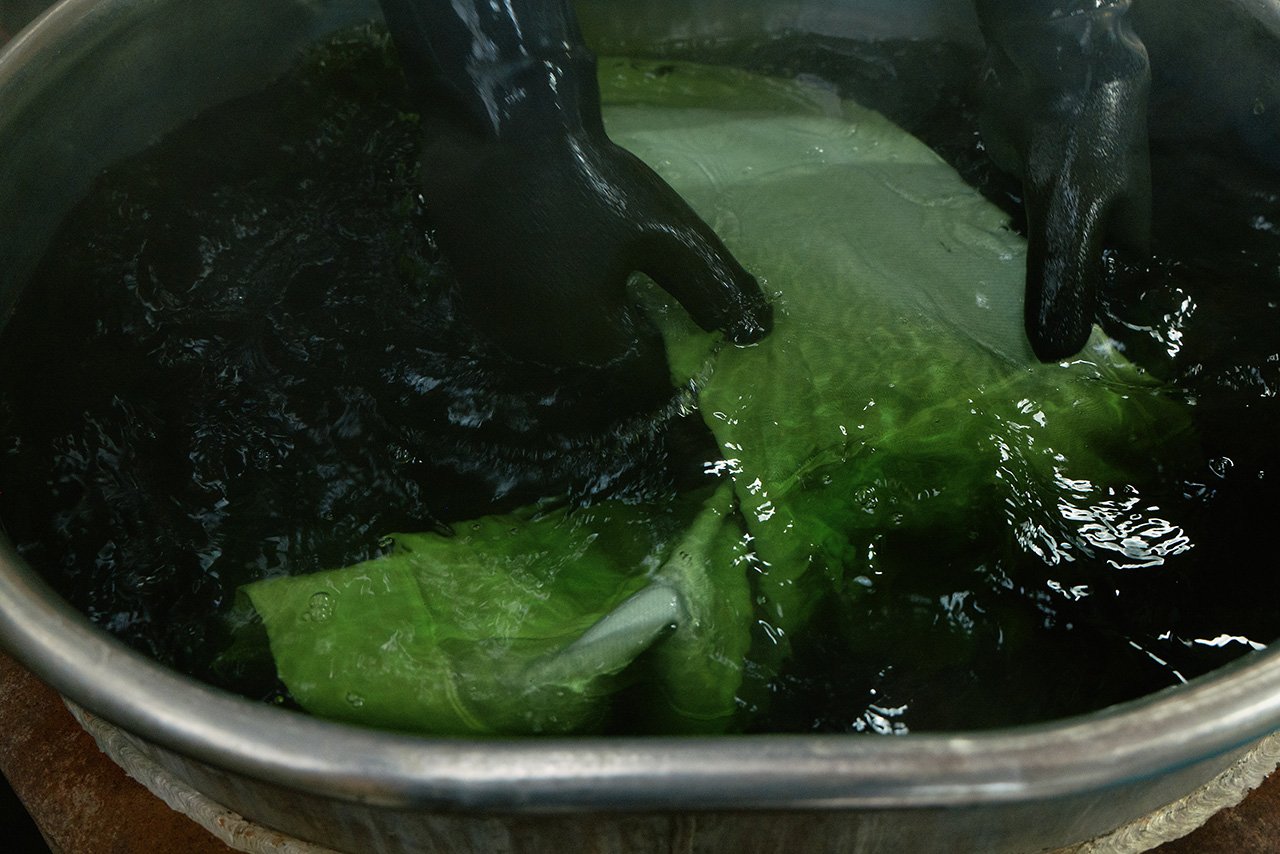
The products being created at visvim are dyed by a workshop in Ome City on the outskirts of Tokyo where they specialize in Aizome (Natural Indigo Dyeing) and Kusakizome (Veggie Dyeing), another natural dyeing technique with a long history behind it.
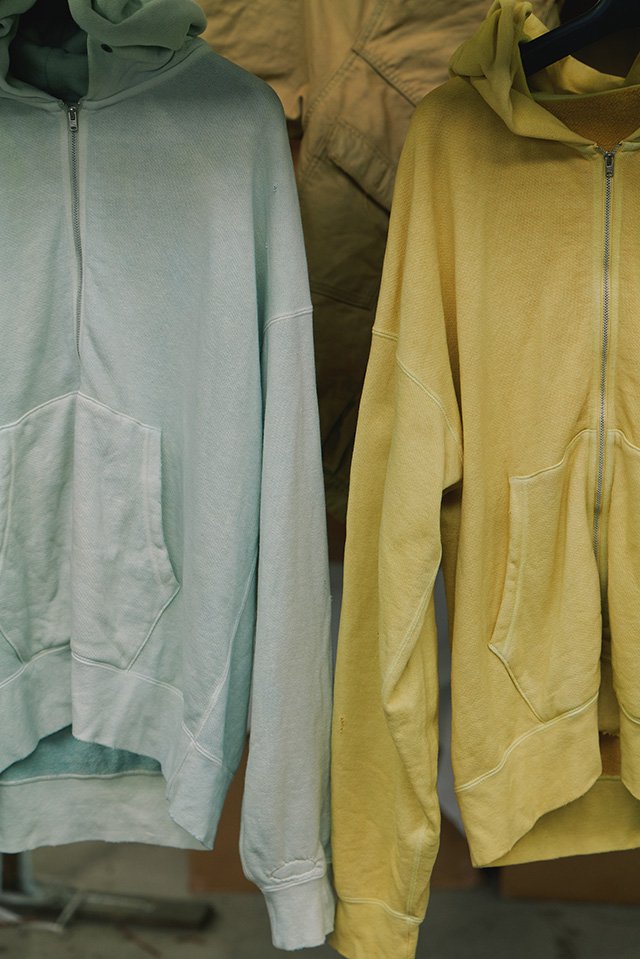
It is no easy task to achieve a specifically intended color using natural materials that can be unstable when compared to a commercially manufactured dye. We meticulously conduct repeat tests so we can adjust the amounts of dye we utilize, alongside the duration of each soak and number of times the fabrics get dipped to bring the color as close as possible to the reference color. This is all made possible because of the information or data that is collected from the extensive experience and intuition of these craftspeople. The whiteboard in the workshop provides a detailed breakdown of the materials that are incorporated for each dye along with the necessary amounts, and specific instructions for the processes that correspond to each color. Grey is with Choji (Cloves), Green is with Enju (Japanese Pagoda Tree) and Kuchinashi (Gardenia), Yellow is with Enju (Japanese Pagoda Tree) and Yamamomo (Red Bayberry) ... The dye derived from Ume (Plum) that produces the pink color is extracted by boiling down the branches collected from a local plum tree.
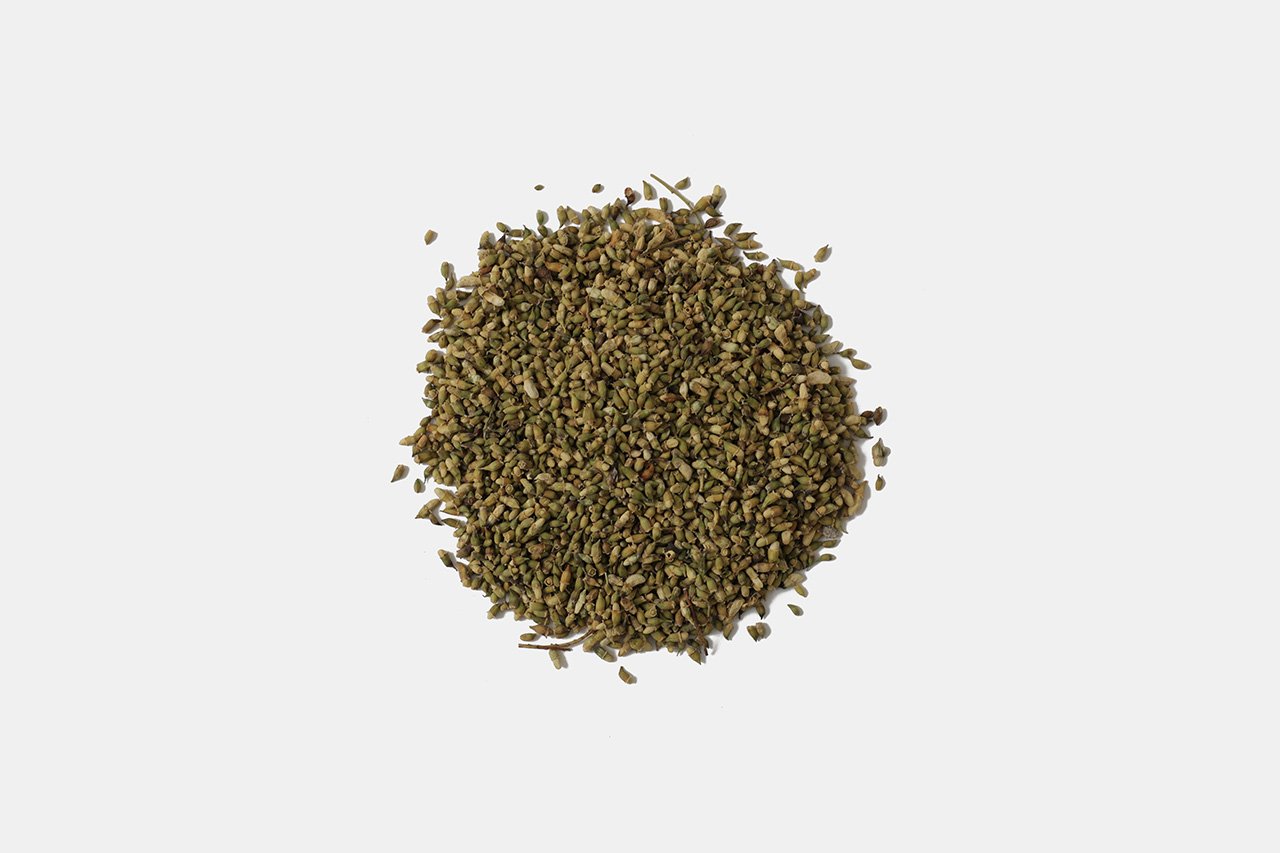
Deciduous tree of the pea family (Fabaceae). It is a tree commonly found along streets and at temples and shrines; the flower buds, known primarily as kaika, are used as a dye source. When combined with kihada (Amur cork tree) it produces a pale-yellow hue, while combining it with kuchinashi (Gardenia) creates a clear green tone.
Dye Color : LT. YELLOW, LT. GREEN
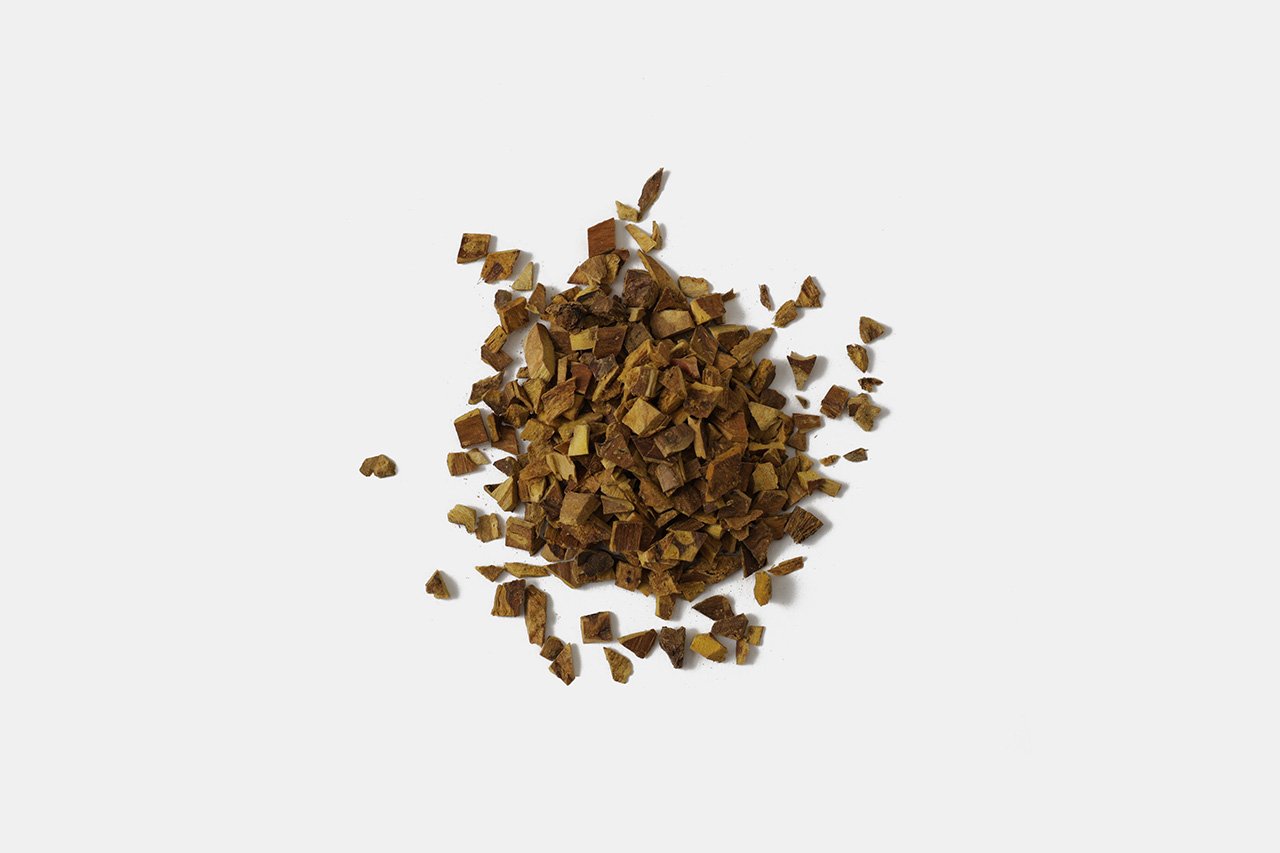
Deciduous tree of the citrus family (Rutaceae). It is characterized by the vivid yellow color of the inner bark. It has long been used in a wide range of applications, including Buddhist ceremonial attire, washi, cotton, and hemp. One of the natural dyes that symbolize the color yellow.
Dye Color : LT. YELLOW
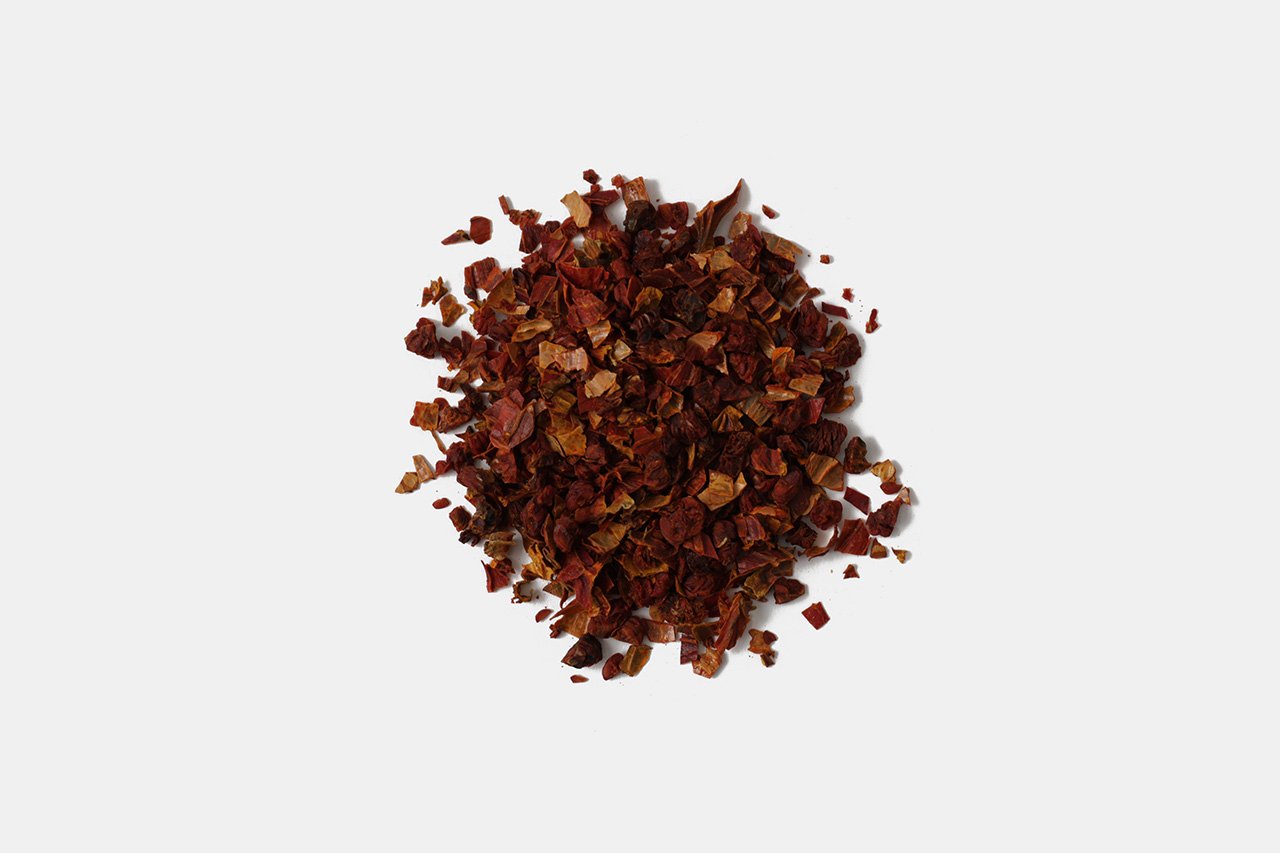
An evergreen flowering plant of the coffee family (Rubiaceae). It produces white flowers in early summer, and its reddish orange fruit, which ripens from autumn through winter is used as a dye. It has long been popular as a yellow dye and for coloring food. Combining it with enju (Japanese Pagoda Tree) creates a soft, refreshing green expression.
Dye Color : LT. GREEN
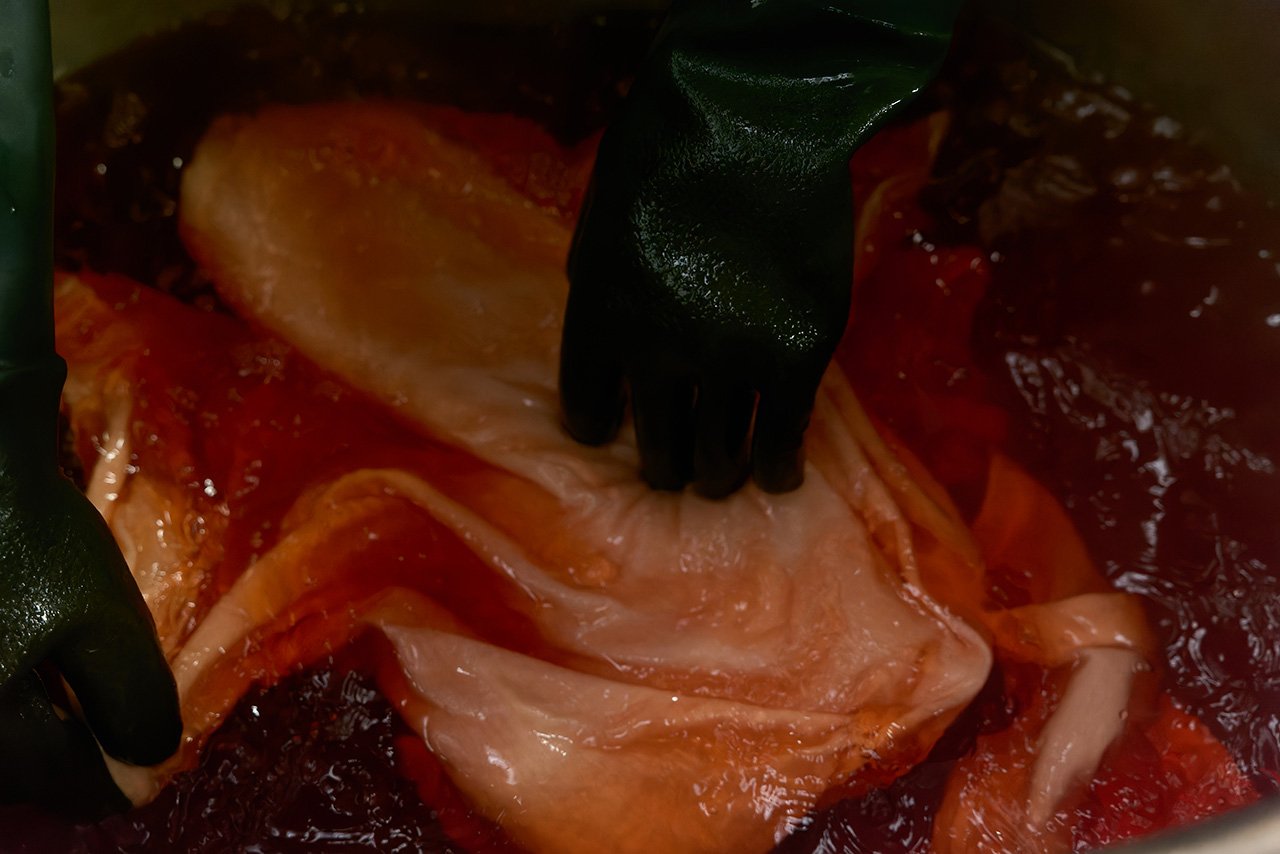
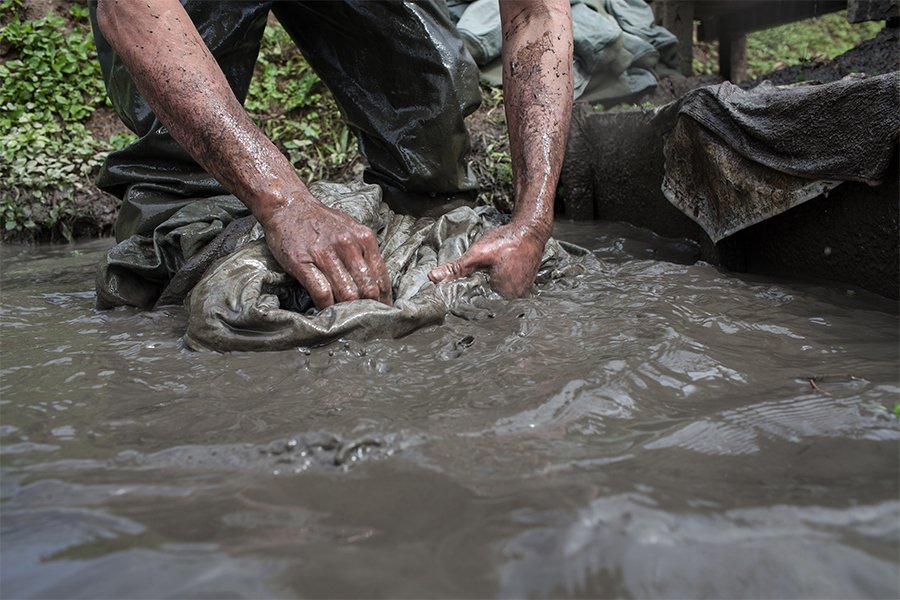
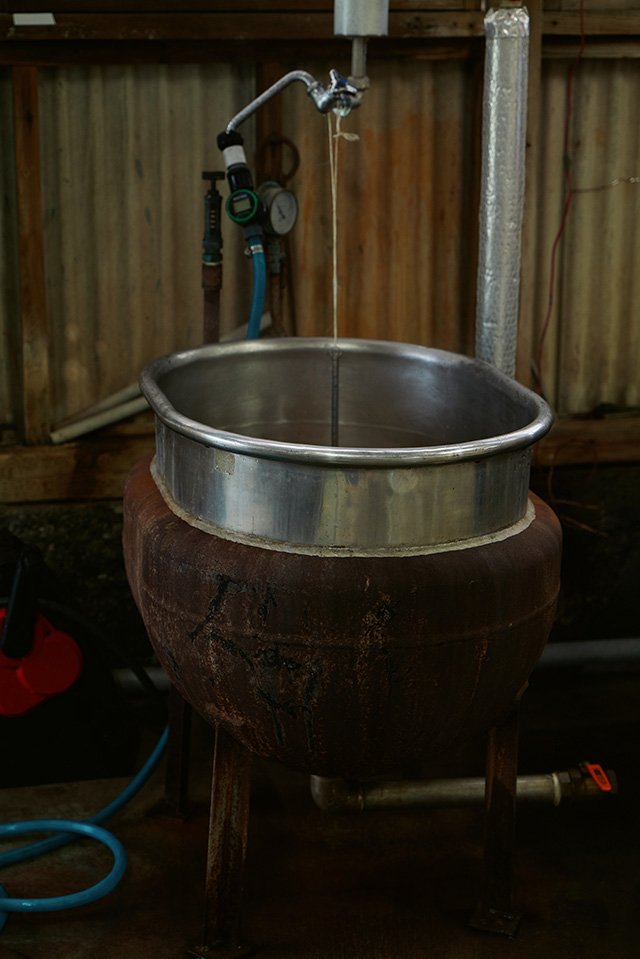
First, the sweatshirts and jackets are thoroughly soaked in a mordant solution containing metals such as copper and iron, which is used to help stabilize and fix the color (when copper is used, the garments will temporarily turn blue). Then two people work together to wring out the garments before soaking them into a dye bath inside a small vat, where the temperature and pH are precisely controlled. Once exposed to the dye bath they immediately spread the garment out while keeping their hands in constant motion to prevent any significant unevenness in color and thoroughly dye the entire garment. This step in the process takes only about five minutes, but to continuously move the heavy fibers that remain submerged in the water requires substantial physical strength. Also, because it is impossible to return fibers that have been dyed to their original color it becomes necessary to maintain a constant level of concentration during this step.
After the dyeing is complete each piece is rinsed with water and spun dry. Every step in the process to this point gets applied to "each garment one piece at a time." To dye the next garment, the previous dye is drained out, the vat gets washed, fresh dye is added, and the mixture is heated again to the appropriate temperature. Since even a slight difference in temperature can significantly alter the color, careful temperature management becomes essential. This process is repeated over and over again to achieve the desired color for each garment.
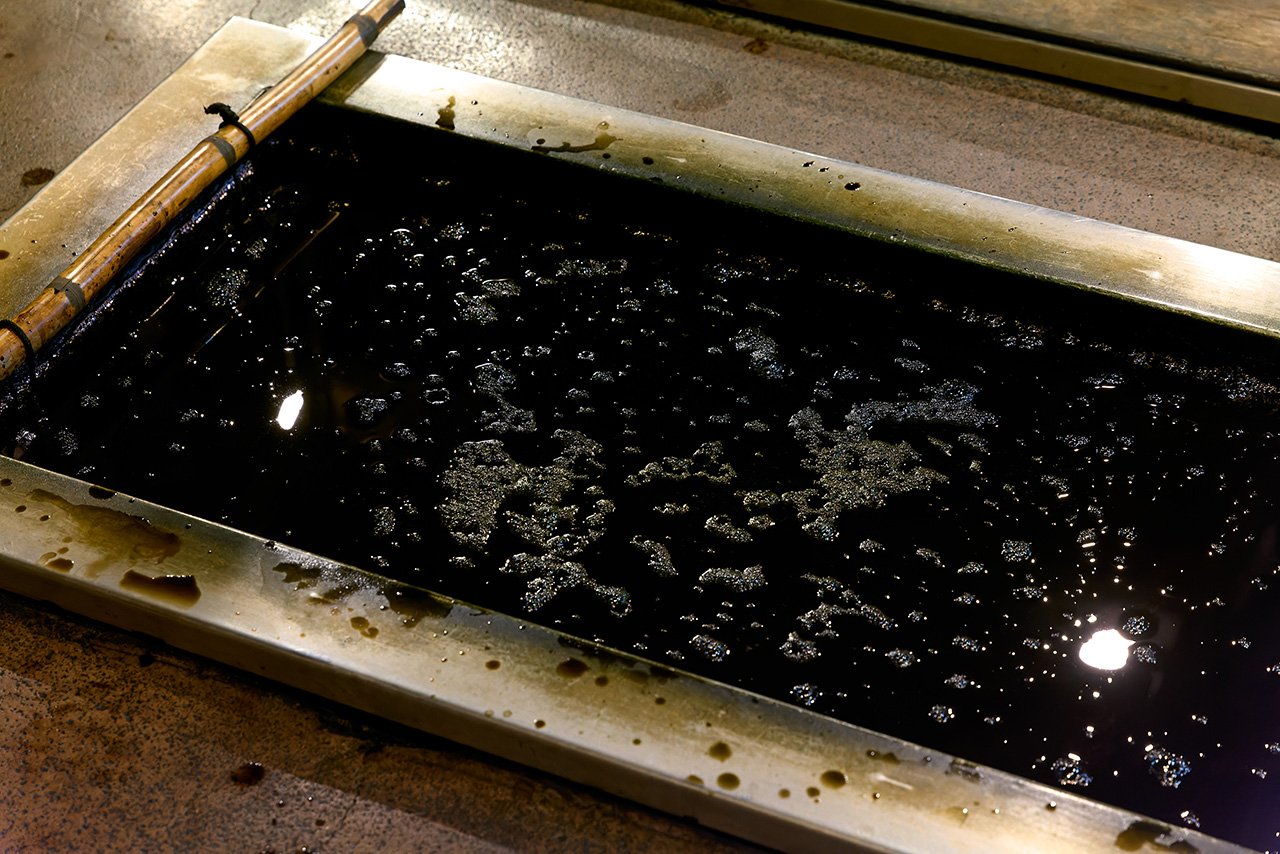
In a different room inside the workshop, shoes and jackets are being indigo dyed. "Aizome" or indigo dyeing, which is a technique of dyeing fabrics into a blue hue by utilizing indigo is said to be one of the oldest dyes known to humanity where its history dates back to times before the Common Era. An indigo dyeing technique that is unique to Japan came to be after introduction of the process from China via the Korean Peninsula during the Nara period and utilizes "sukumo" a compost like material that is made by fermenting the "tadeai" (Japanese Indigo) plant. This workshop remains committed to the "natural indigo lye fermentation" technique, a special method that has been practiced since the Edo period. It is a traditional dyeing technique that utilizes naturally derived fermentation bacteria, without using any chemical reducing agents.
Nutrients such as sake and wheat bran, along with an alkaline solution made from the ash of a broad-leaved tree are combined with sukumo (fermented indigo leaves) that have been dried and fermented for approximately one year; this mixture is then stirred daily while precisely controlling the temperature at all times. This action causes the liquid to ferment allowing the indigo to dissolve into the dye solution. When the fibers that have been soaked in the dye solution are exposed to air the oxidation creates a reaction to produce the characteristic vivid blue color. As living bacteria can constantly experience subtle changes in their properties and balance, managing them to remain well in order to dye fabrics consistently requires much experience and great effort.
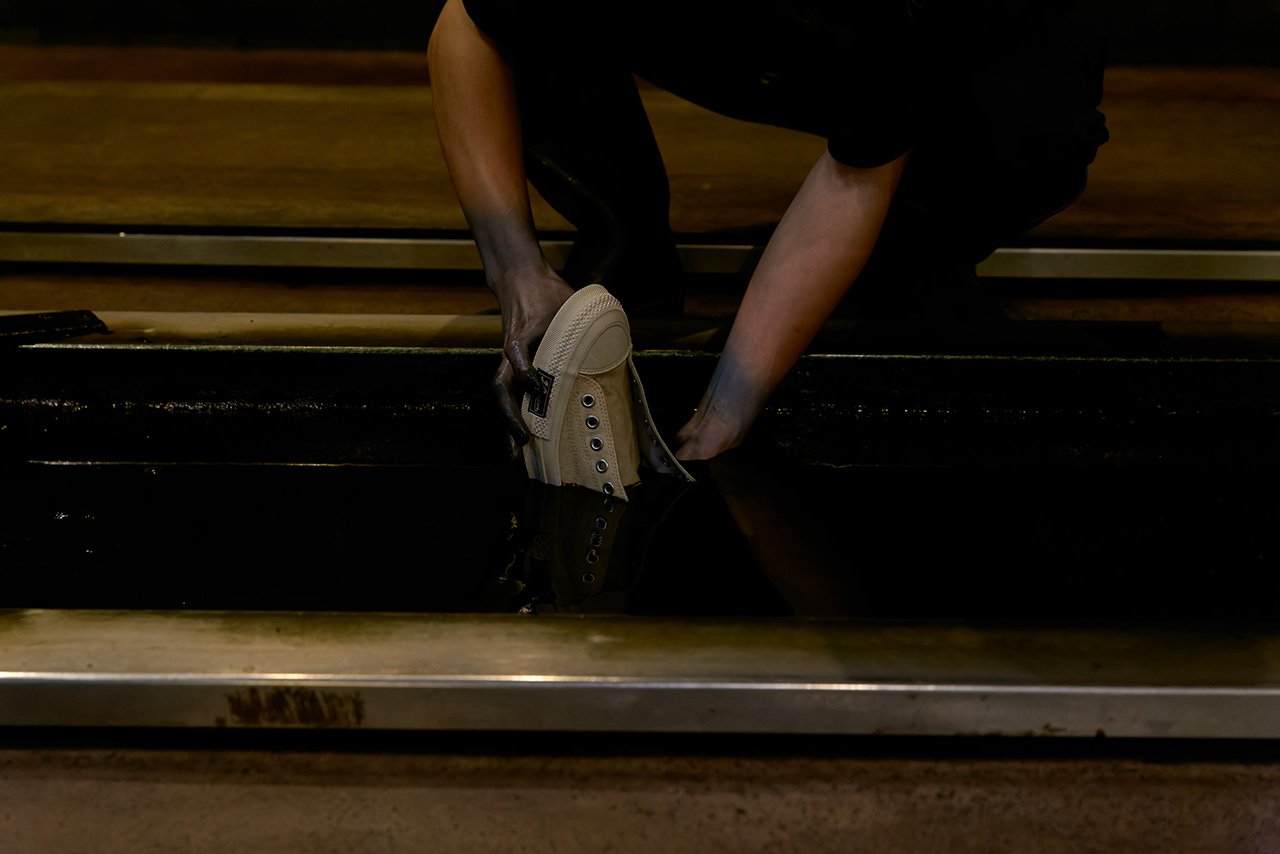
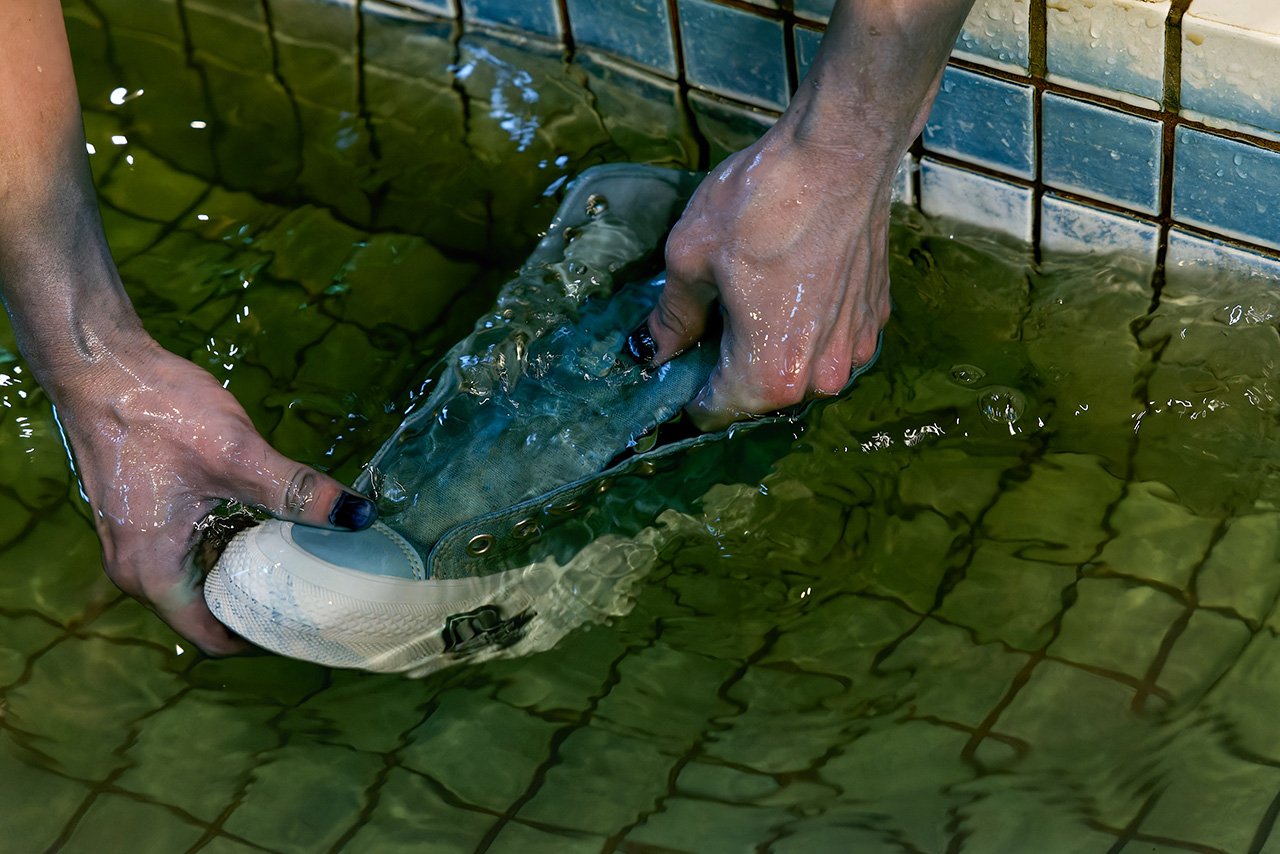
An artisan demonstrates their delicate touch by holding the shoes with both hands and slowly dipping them into a pool filled with indigo dye. Once the shoes are fully submerged, the upper fabric is kneaded to ensure the dye will penetrate through to the seams as well. Inside the pool of dark indigo, the shoes are not visible. The shoes soak for about a minute while they work their way over the entire upper with their hands. They are then removed from the pool of dye and immediately dipped into water to delay any possible oxidation. Since the reaction that initiates the color change can happen in a matter of seconds, it is crucial for this step to be performed quickly. This process is repeated until we gradually reach the intended color intensity.
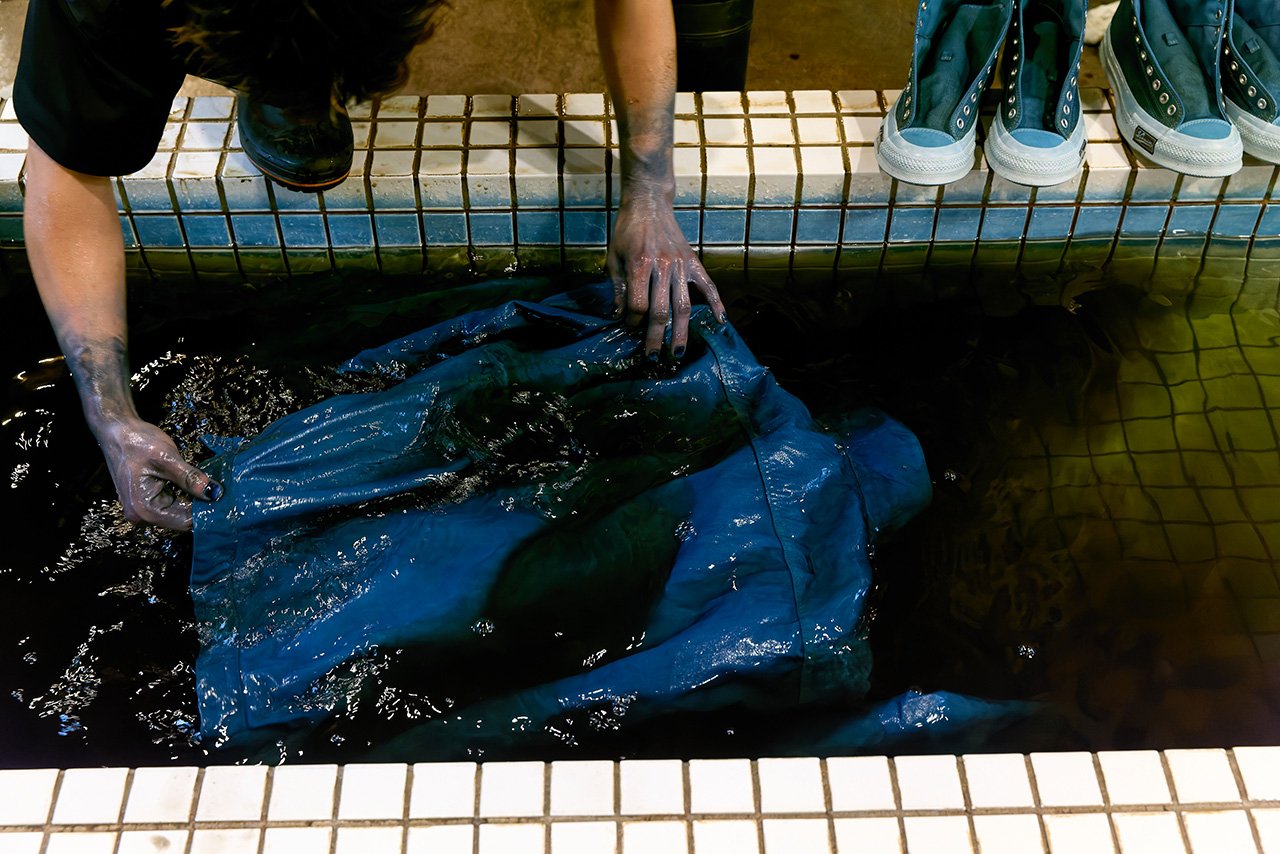
Each and every single product gets dyed by repeating this laborious process over and over. These soft colors with great depth that provide so much allure can come to life because of the natural materials being utilized but it also comes with a level of difficulty that requires a great deal of time and effort. Behind each and every one of these products, which will develop unique character as it ages and foster a growing sense of attachment lies techniques that were cultivated over a long period of history alongside a sincere dedication of the artisans' passion for their craft.
Text: Kosuke Ide
Photo: Keisuke Fukamizu
Related Posts