
Dissertation
A Timeless Universal Harmony
For people today, where everything has become more about ease and convenience the act of tying a necktie or wearing some leather shoes may feel like something that is restrictive and troublesome. But then again, isn't fashion at its very core something that transcends mere rationality to reflect a desire to chase down our very own satisfaction.
| Category: | Philosophy |
|---|
| Date: | 2026.09.08 |
|---|
| Tags: | #fw26 #necktie #tradhitionalstyle #visvim |
|---|
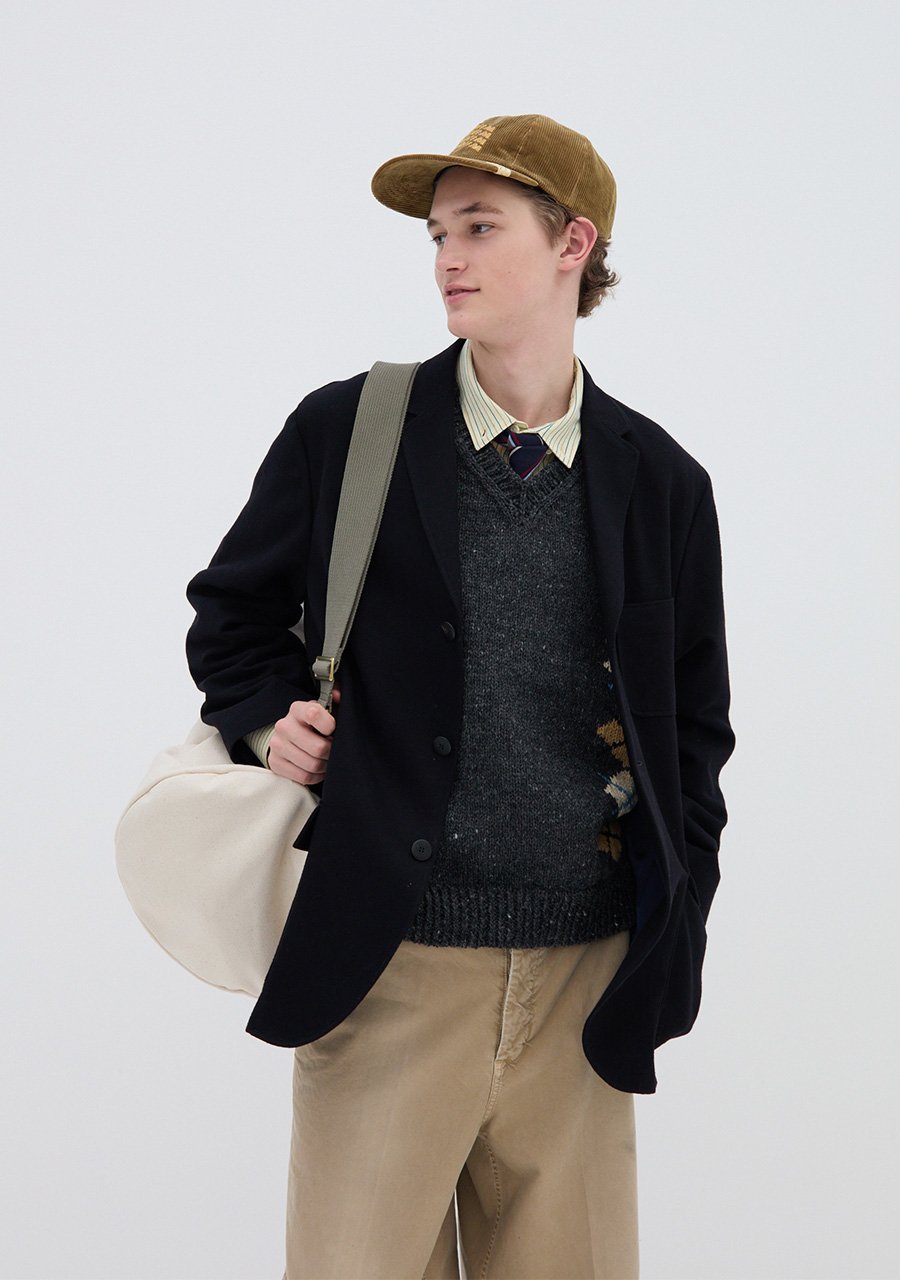
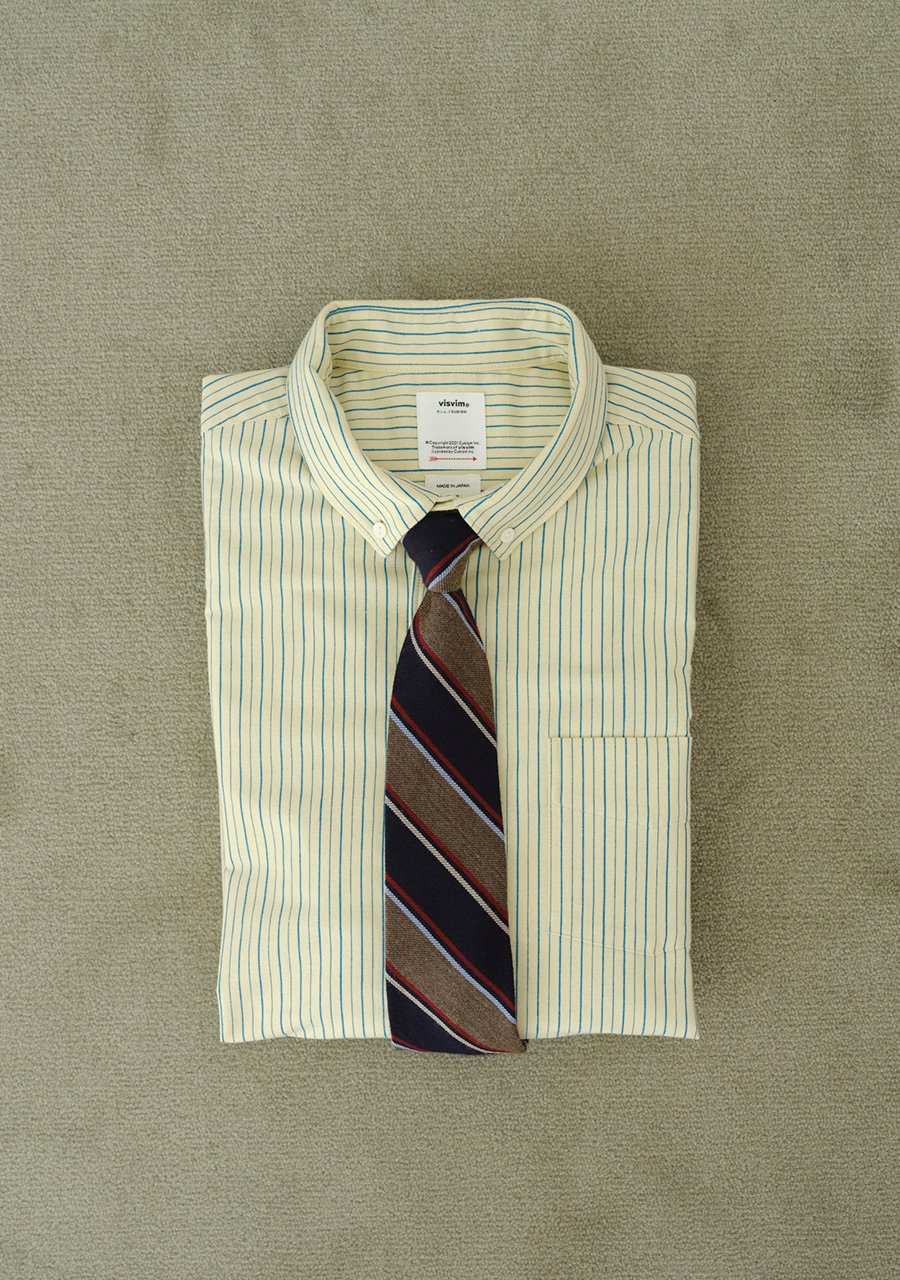
A Button-Down Oxford Shirt made with a material featuring varying stripes that present uneven widths appearing like they had been drawn by hand. The stripes are achieved through dyeing (print) rather than weaving. Stripes created by dyeing techniques include "tsutsugaki" and represent an expressive style found in materials that utilize traditional Japanese dyeing techniques that date back hundreds of years.
The Joys of Traditional Style that can bring you happiness
When looking back over the long history of fashion in the world it has become increasingly casual with the passing of time. Particularly in recent years there has been a surge in popularity for clothing that is comfortable to wear, easy to maintain, convenient and hassle free resulting in items such as T-shirts, jersey pieces, and sneakers spreading all over the world to become the choice outfits of so many people. The materials being applied for clothes has also increasingly shifted towards relatively new synthetic fibers like spandex and polyester.
Within these broader trends I felt as though the so-called "traditional" style that had always existed within fashion was gradually becoming obsolete. In Japan, a heightened interest in Traditional American Fashion that became known as "Ivy Style" emerged amongst the younger generation in the 1960s to become one of the foundational elements of men's fashion. The looks would include button down shirts, three button tailored jackets, neckties, penny loafers and so on. As the trend of traditional style became deeply rooted, outerwear pieces like duffle coats and pea coats along with loafers showed great popularity among students even during the 1980s when I was in high school. Even today you may occasionally spot an older gentleman type who has continued to love that classic traditional look to stylishly pull off an outfit that reflects those preferences.
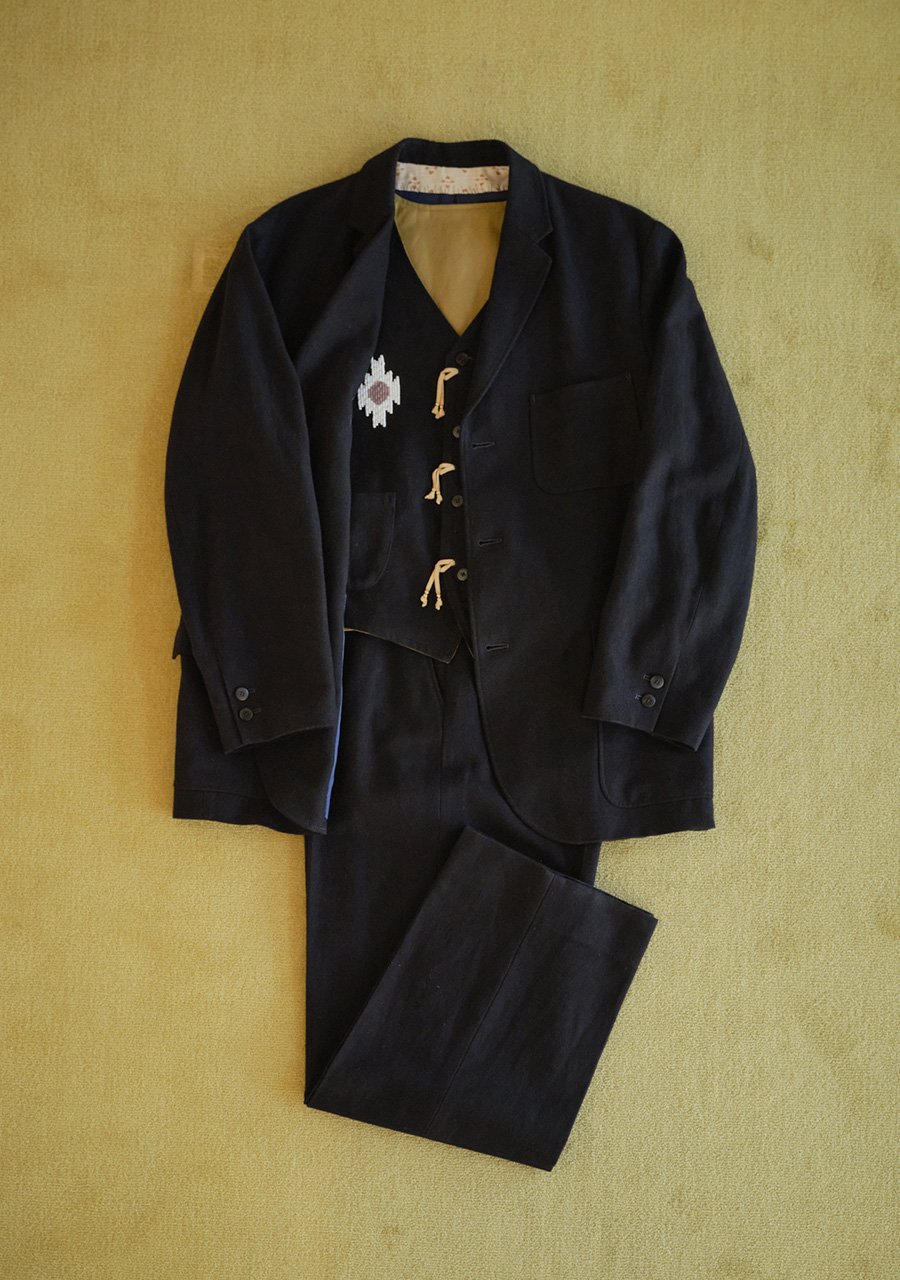
A three-piece setup that includes a Tailored Jacket, Reversible Vest, and Trousers made with a wool linen flannel material. This material weaves together some linen and wool with a voluminous texture and features a brushed finish to express a dry texture that evokes the appearance of a well-aged fabric where much of the natural oils have evaporated from the yarns. The tailored jacket and trousers feature a more relaxed, classic silhouette. The vest is reversible and features a wool linen satin fabric on the reversed side. Both sides of the vest are adorned with unique glass beaded embroidery details.
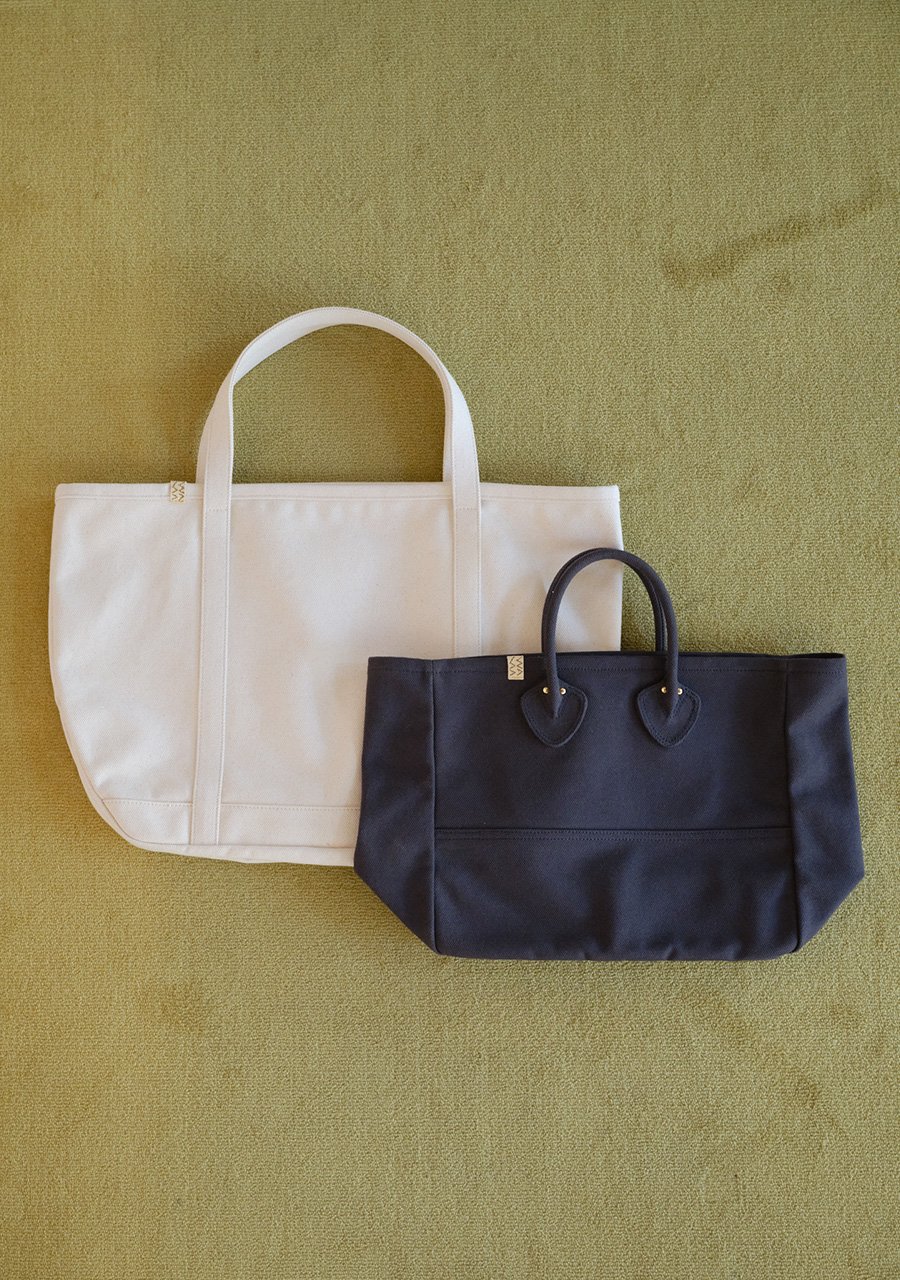
A category of Tote Bags featuring classic designs that are easy to incorporate into a variety of looks regardless of age, gender, or personal style. Available in a total of four variations, with different handle lengths and sizes. The canvas material is woven by a long-standing Italian textile manufacturer and is characterized not only by its durability but also by its elegant aesthetic feel that evokes a sense of history. With more use it begins to mold and soften to reflect your lifestyle.
For people today, where everything has become more about ease and convenience the act of tying a necktie or wearing some leather shoes may feel like something that is restrictive and troublesome. But then again, isn't fashion at its very core something that transcends mere rationality to reflect a desire to chase down our very own satisfaction. I find it hard to imagine a life in which just the easy and effortless will bring true joy. For example, I enjoy listening to music on vinyl and that is something that requires substantially more effort than listening to music via online streaming. You must place the vinyl record on the players platter and gently place the needle, then flip the record over when one side finishes. Regular maintenance is probably necessary as well. In actuality though I enjoy the entirety of the process itself.
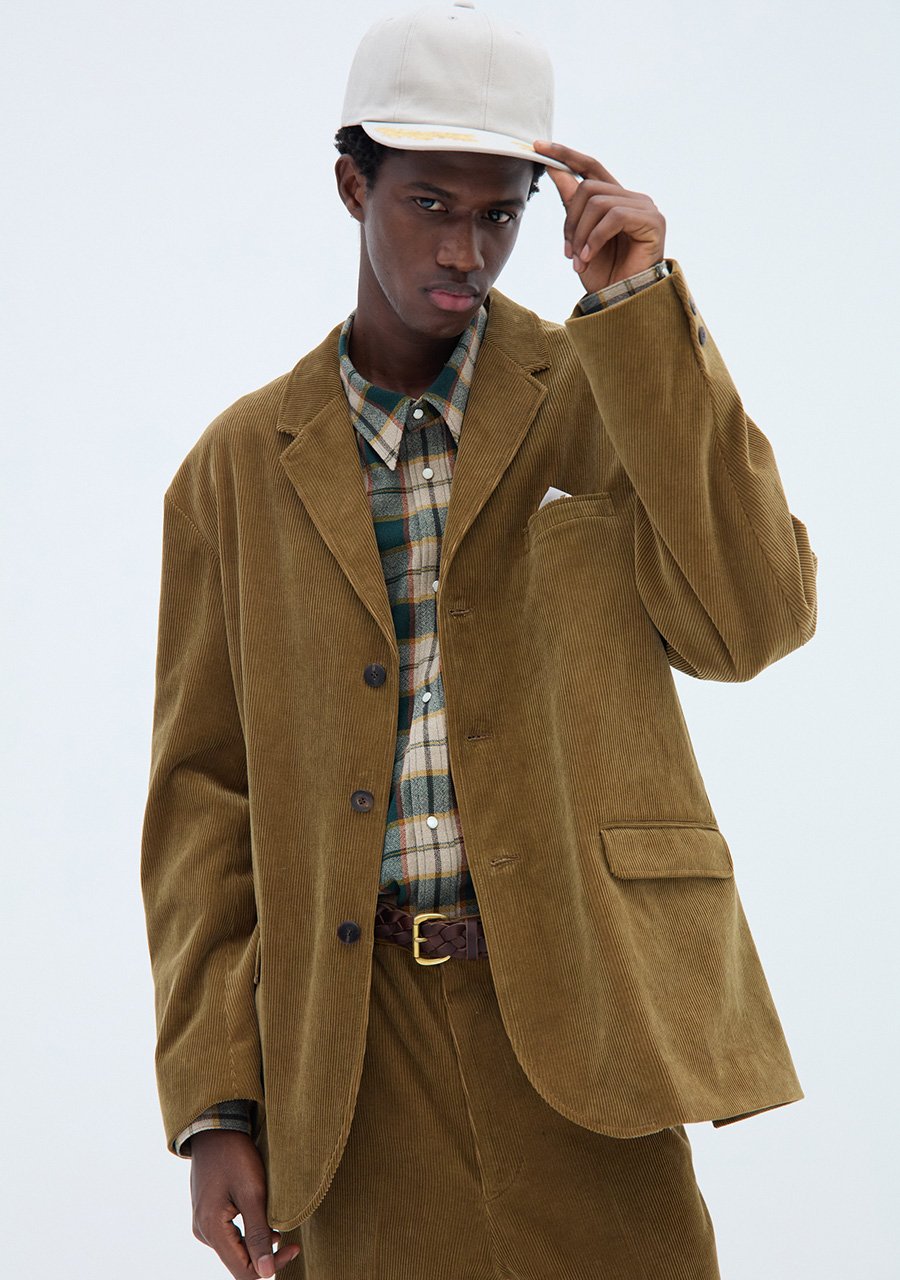
Of course, being able to relax is a wonderful thing, but it is also a great thing to incorporate little pleasures that are solely for your own enjoyment like wearing a pair of leather shoes or putting on a necktie, even if they may seem like a bit of a hassle. Driven by this sentiment, we have created some products that offer a more modern reinterpretation of traditional style pieces that have been designed to pair seamlessly with casual style staples like sweatshirts and sneakers.
Hiroki Nakamura
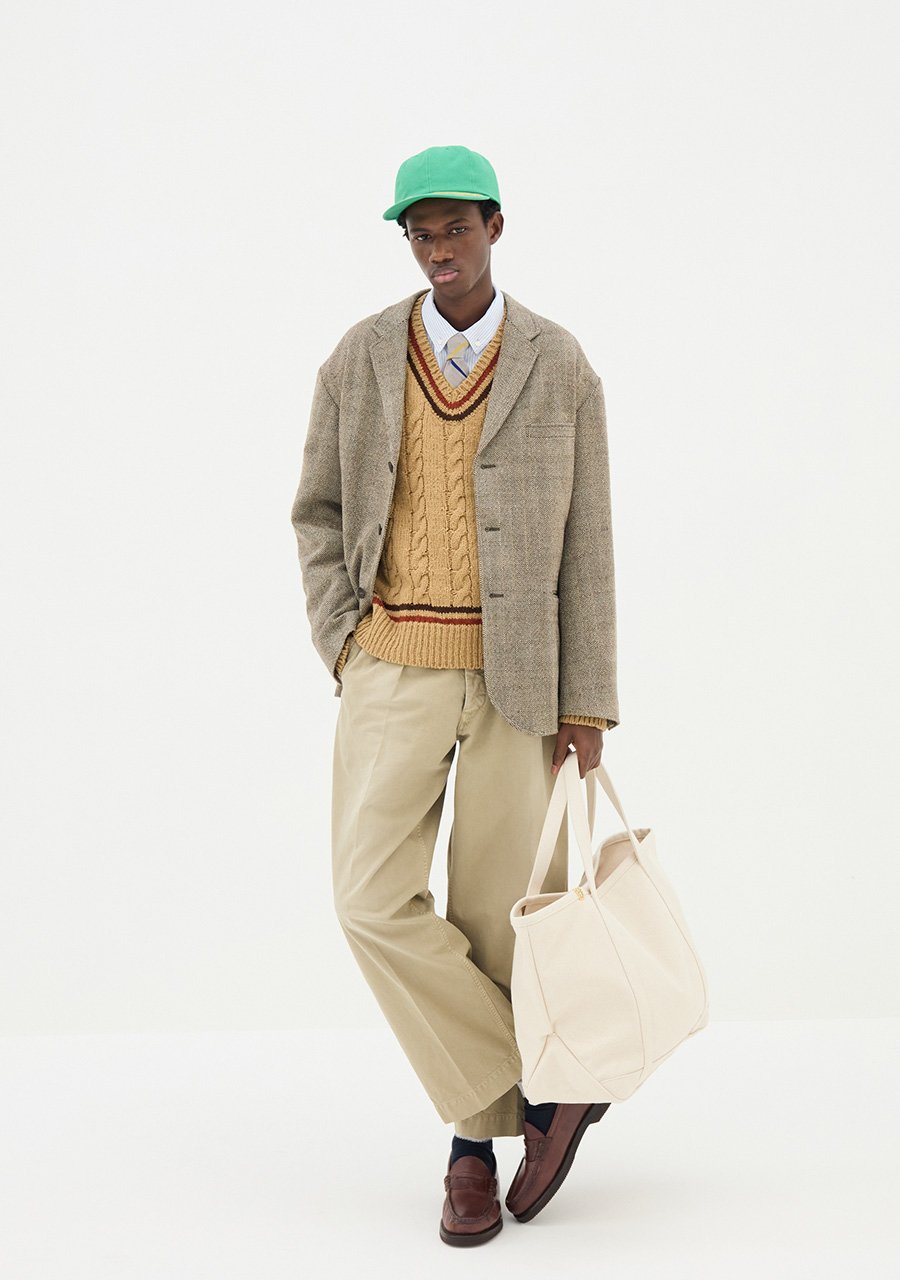
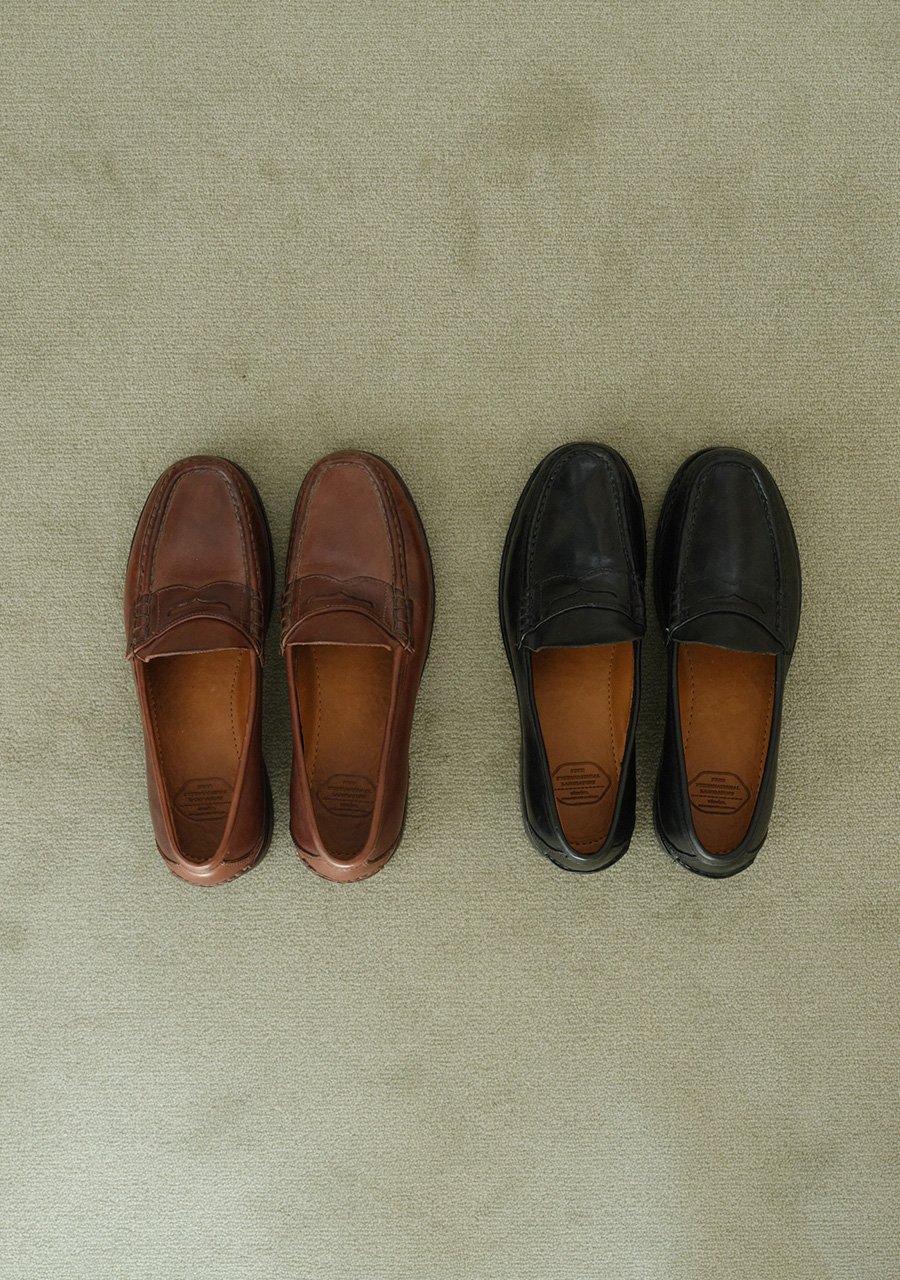
A Penny Loafer that features classic design details with a moderate profile with some volume. Hand sewn construction completed by skilled craftspeople who hand stitch the uppers that consist of a meticulously tanned Italian vegetable tanned horsehide. Custom Vibram rubber outsoles alongside a cork insole that molds to your feet with time and wear ensures a comfortable fit. Much of the areas that come into direct contact with your feet are made up of natural materials offering excellent breathability by allowing extra moisture to permeate.
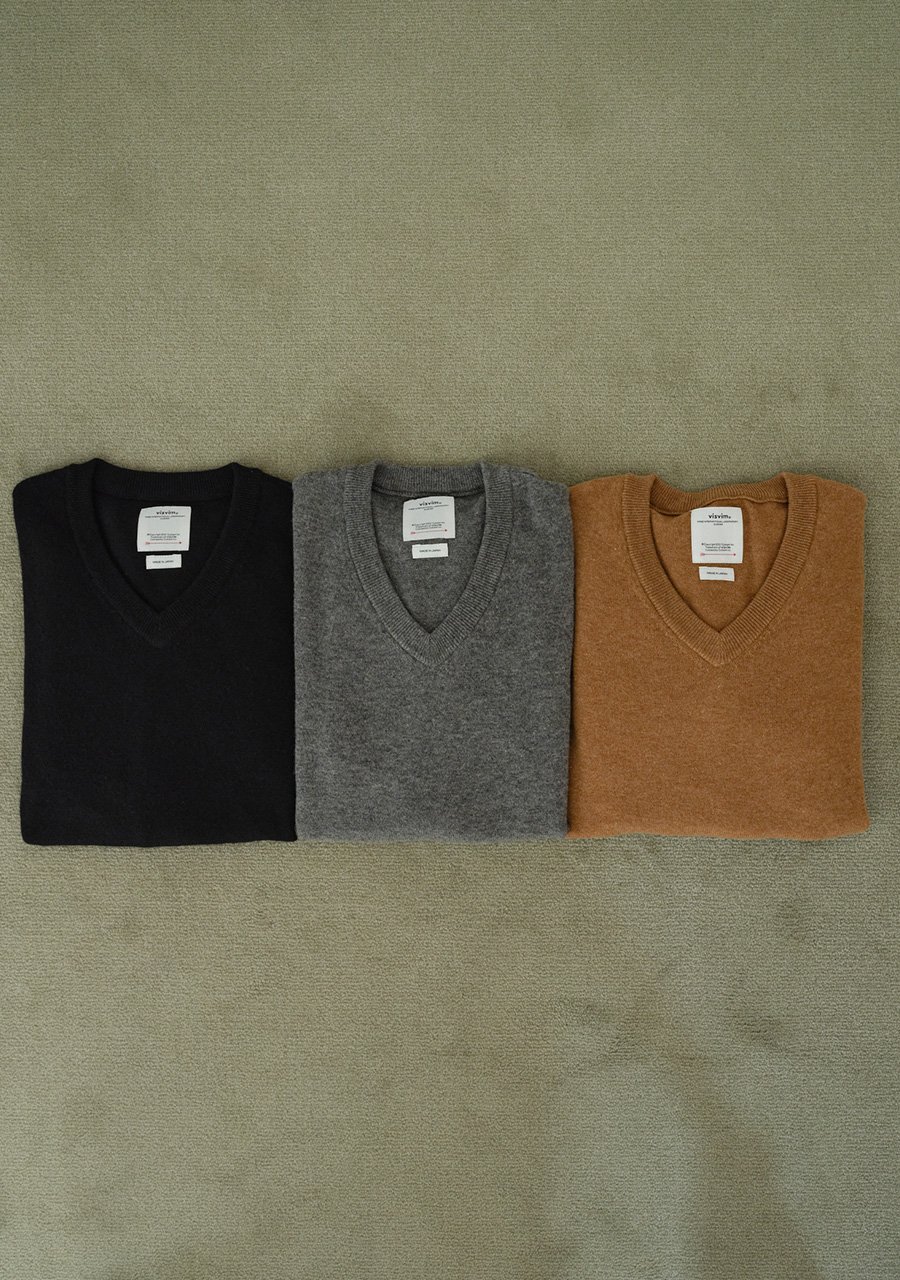
A High Gauge Knit V-neck Sweater made with the finest quality cashmere that features an extremely soft hand feel that is stress free even when coming into direct contact with your skin. Knitted from a fine yarn with just the right amount of tension to offer a lightness and softness that is comfortable when worn. This material also features excellent durability alongside exceptional heat retention despite its lightweight.
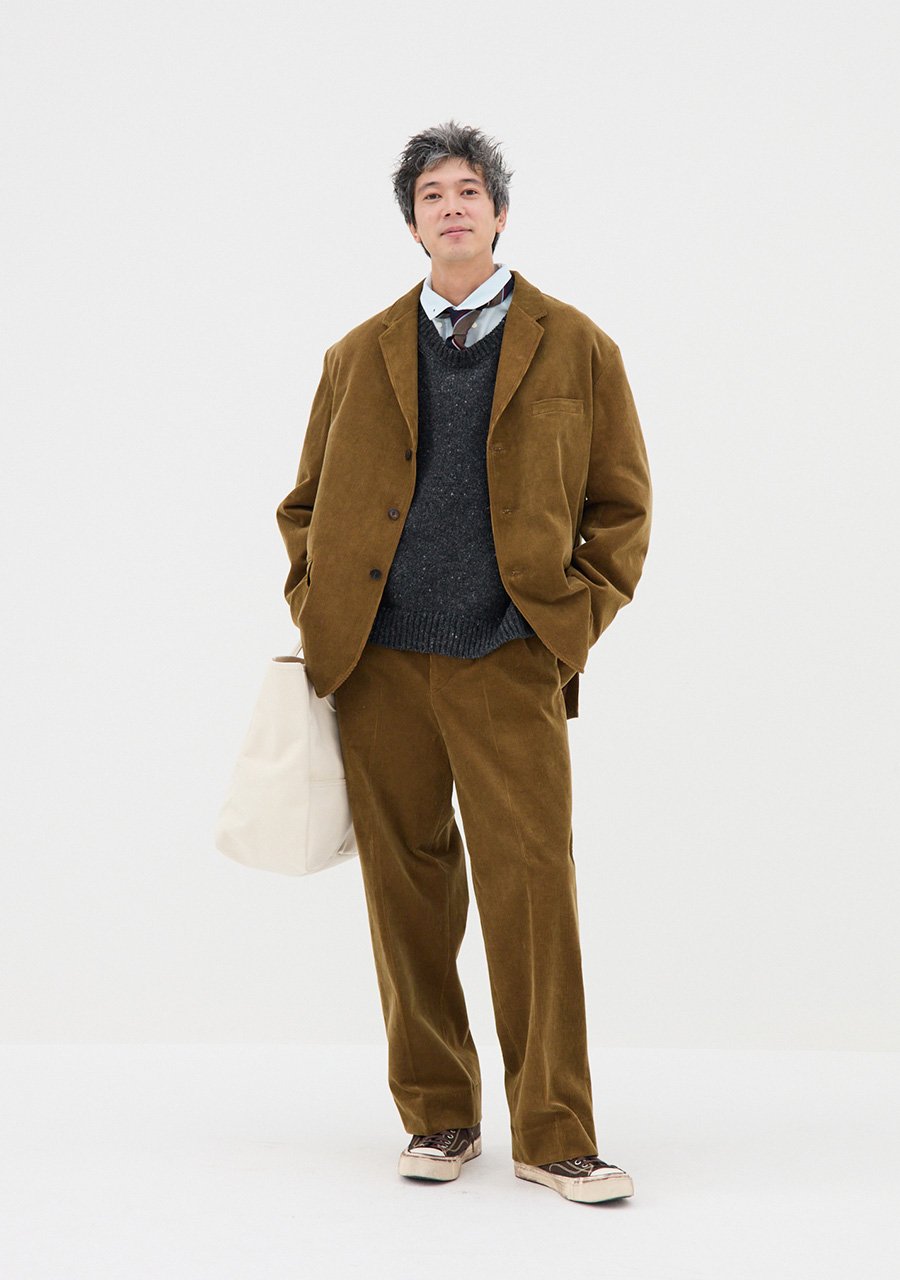
Handsewn Necktie
The roots of the necktie are said to lie in the cravat, a scarf like neck ornament that spread from France to England in the 17th century. That said, it was not long ago that the necktie in its slender form with pointed tip became the standard which is what is so familiar today. In 1926 a manufacturer of neckties in New York developed a revolutionary method that involved cutting the fabric on a bias (at a 45-degree angle) and assembling the tie from three separate sections that are known as the blade, the neck, and the tail. The result was a tie that was easier to knot and maximized the usage of the fabric with virtually no waste. This type of tie quickly spread across the world and during the Taisho era it was adopted in Japan as well, alongside the suits worn by modern businessman.
There is a certain long-established manufacturer that specializes in neckwear that has conducted business in Japan since 1935 and this company has produced ties domestically for over 90 years. They are responsible for the production of visvim's ties.
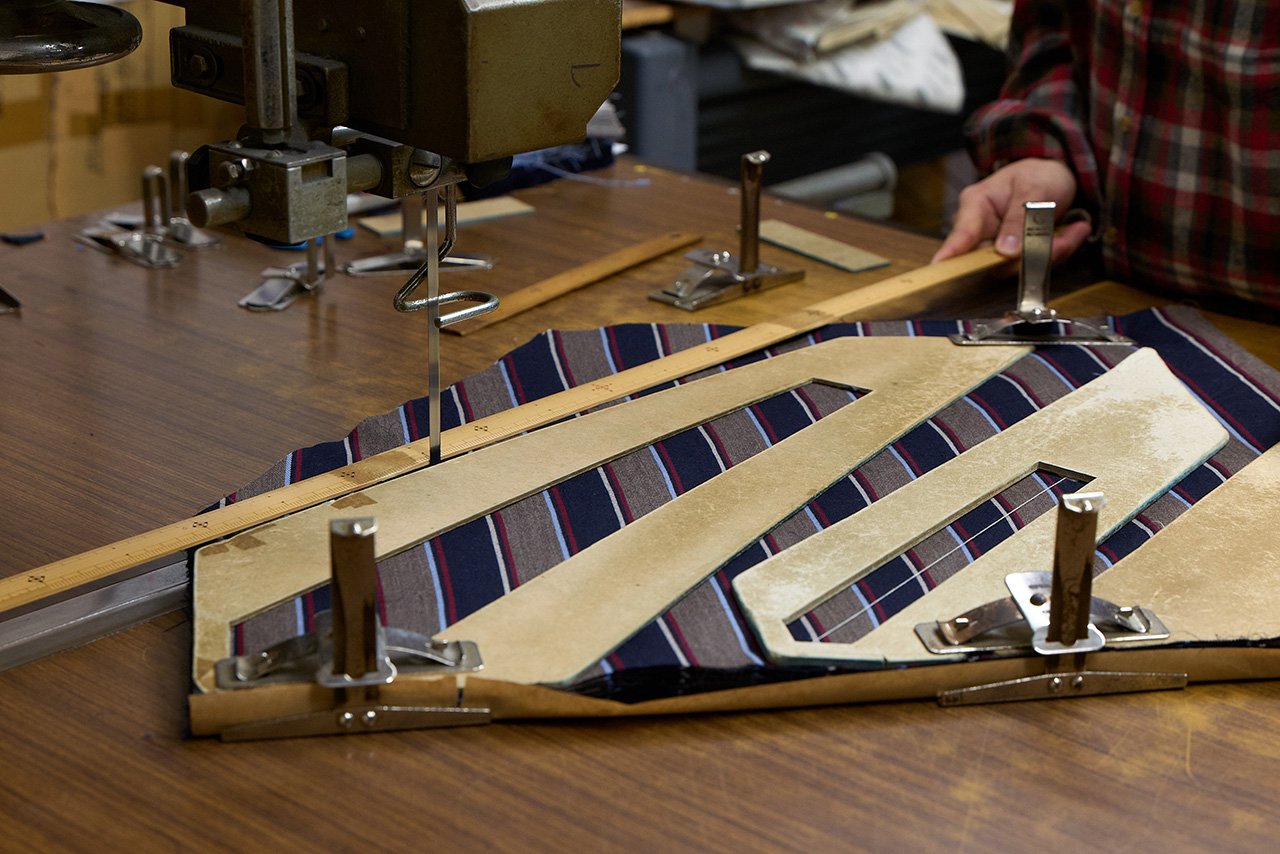
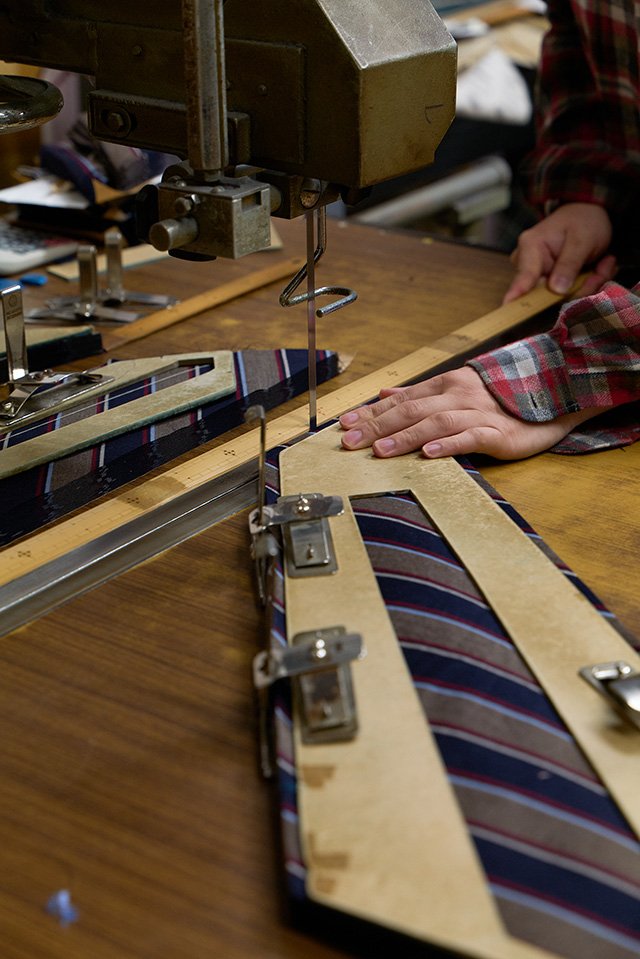
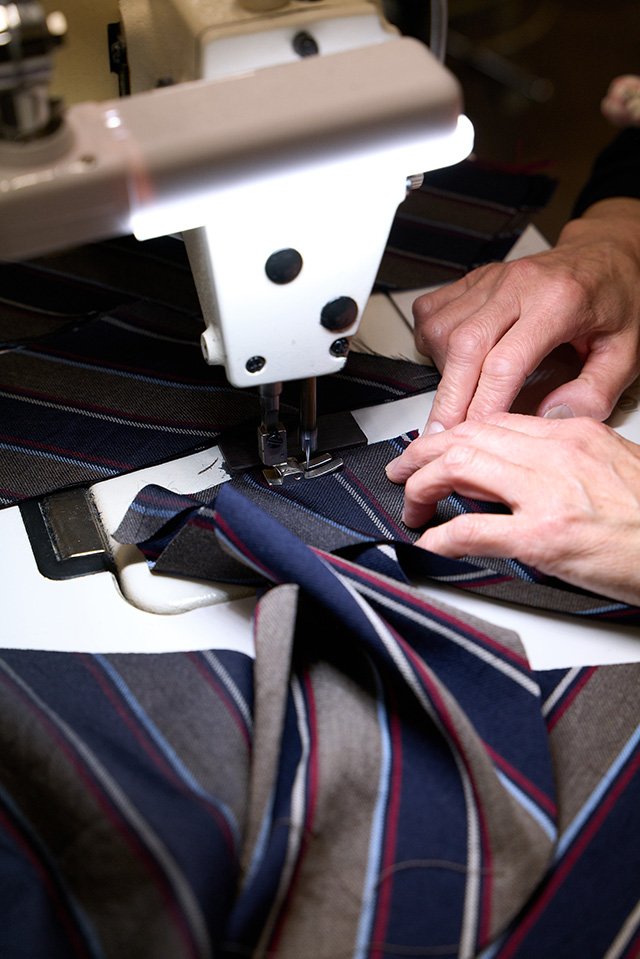
This season's ties utilize a custom wool silk material that offers something with a little more substance and warmth in comparison to the 100% silk ties that are ubiquitous today. This wool silk material undergoes a washed finish to create a vintage like feel that presents a soft voluminous quality with a slightly fuzzy texture.
A necktie is constructed by sewing the outer fabric with an interlining into a tubular shape. While it seems simple when described with words, the process involves numerous steps of which a vast majority are carried out by the hands of skilled craftspeople.
We first cut the fabric by utilizing a pattern and prepare each adjoining section which is the blade, the tail, and the neck. The regimental pattern (diagonal stripes) originated from the practice of bias cutting, a technique where the fabric is cut diagonally in relation to its warp and weft threads. This structural approach is not only economically efficient but also harnesses the natural elasticity of the fabric (as woven fabrics with a grid structure tend to stretch less along the warp and weft while stretching more easily along the diagonal line) making it easier to tie the necktie. On the other hand, working with a fabric that is prone to stretch can also imply that handling it requires a delicate touch.
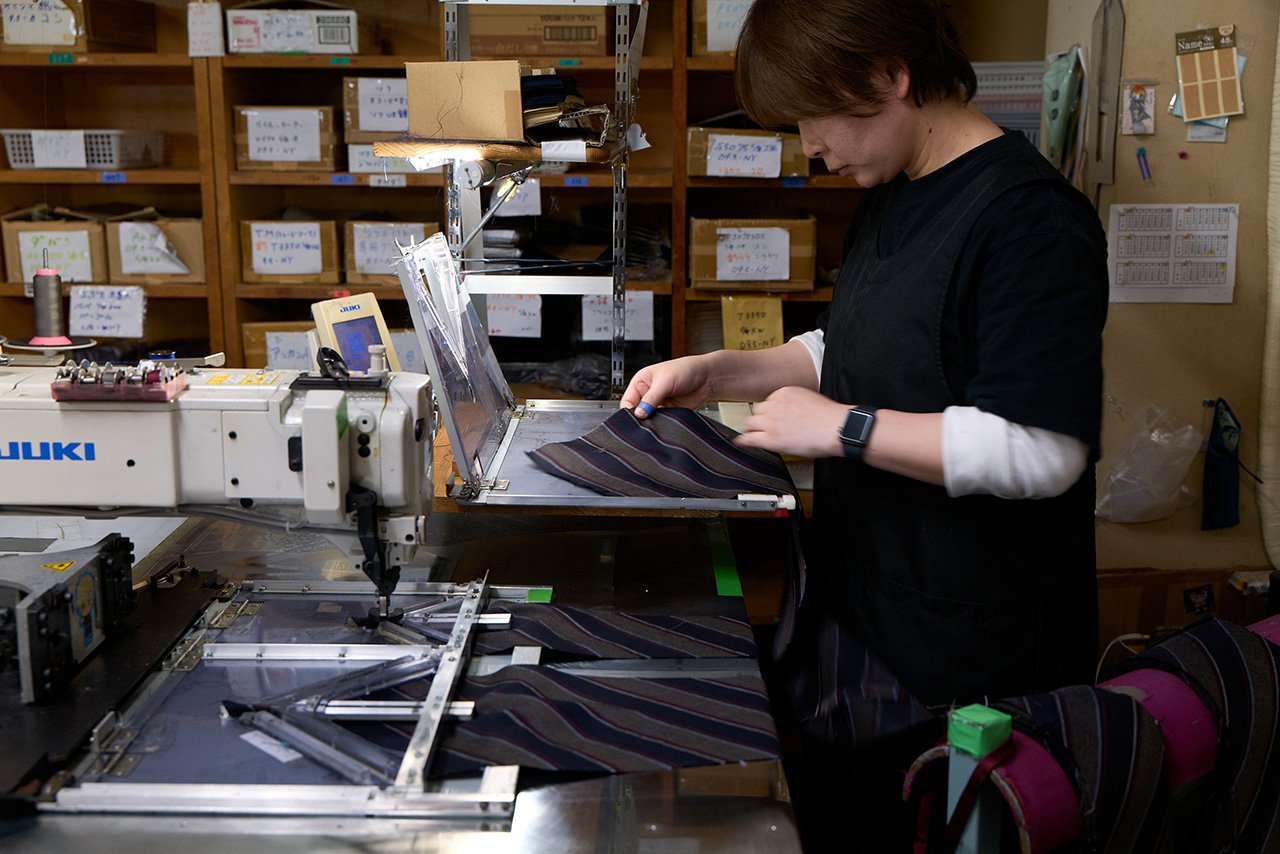
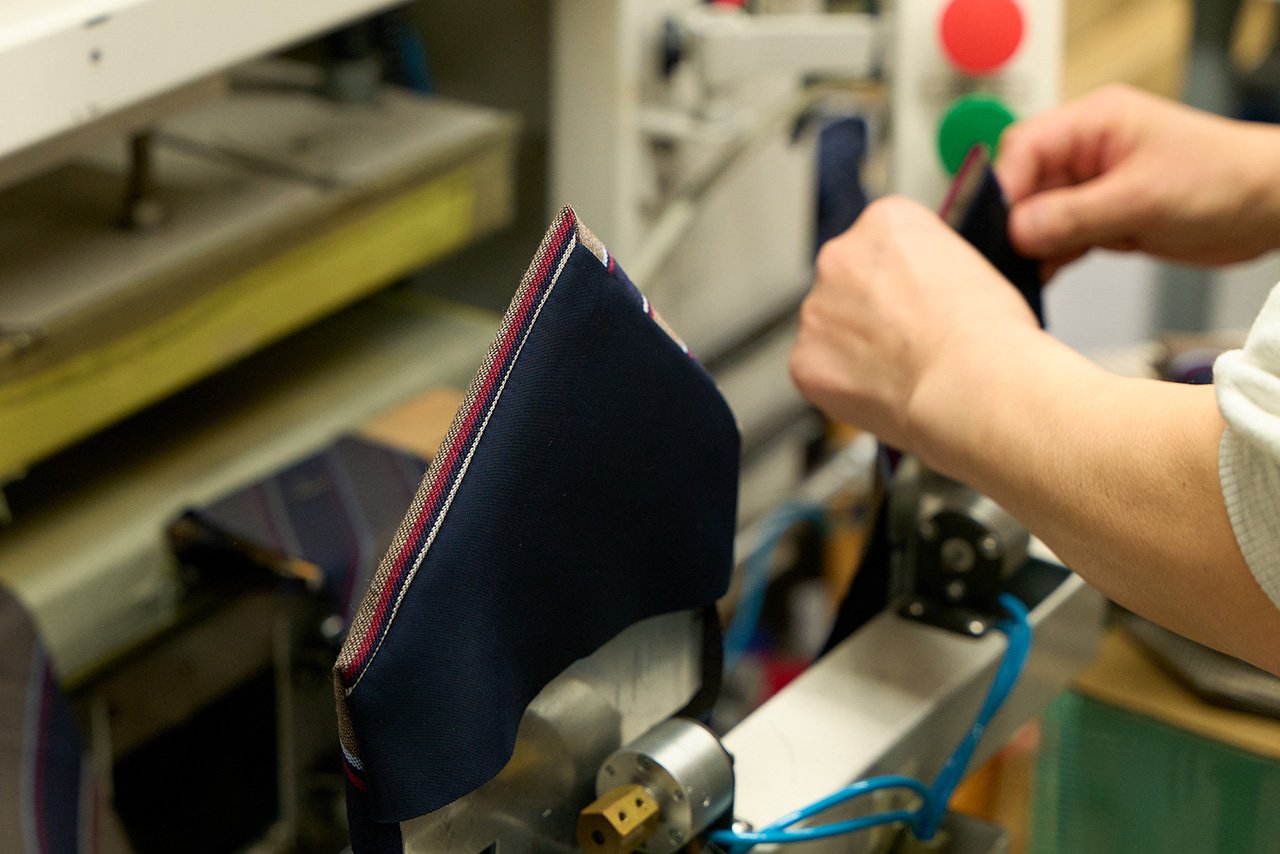
Next, the aforementioned parts are joined together using a sewing machine, then set onto a specialized machine that attaches the interlining. Even though machinery is used here, the process remains a collaborative effort that is monitored closely by a human. Particular care is taken to bring out the beauty of the blade, which can be considered to be the very "heart" of each tie. Through a pressing process, the three-dimensional tip of the blade is sculpted by forming the edges. A delicate tactile sensibility guides the meticulous balancing of the edges to create that soft, subtle curvature.
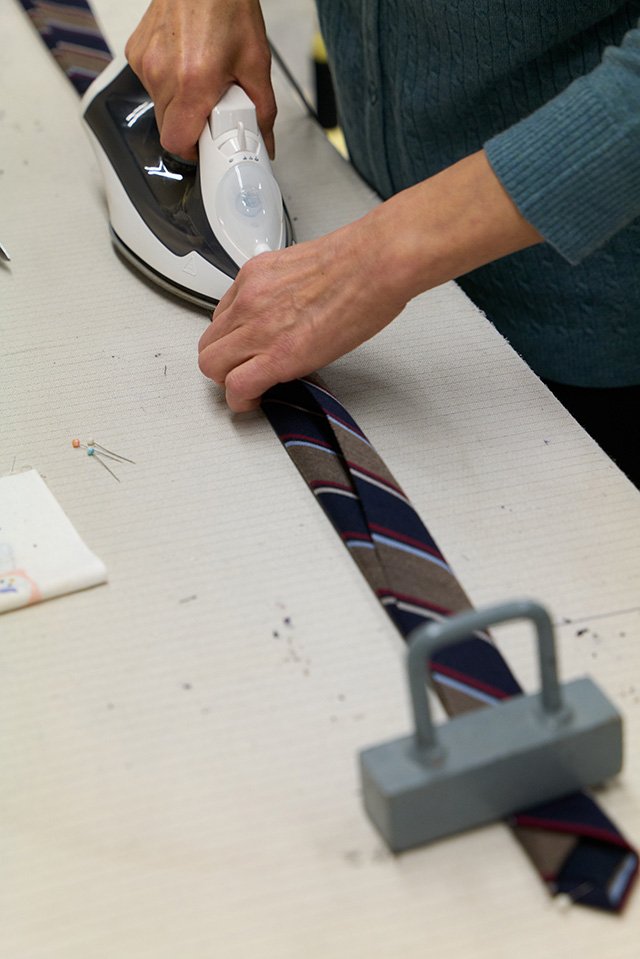
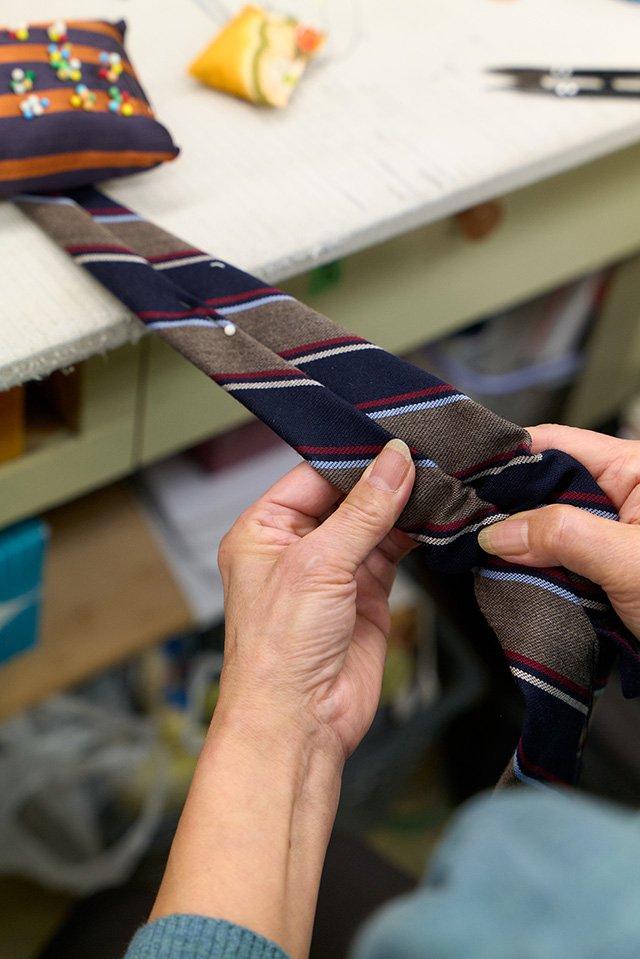
Each tie is then individually ironed out before proceeding to the "hand stitching" of the reverse side. While it is common for this process to be completed instantaneously with specialized machinery, opting to sew it by hand allows for subtle nuances to occur which creates a drape that lets an expressive and playful character come through. You then pin the outer fabric to encase the interlining in order to create a temporary basted hold. Then while removing the pins one by one, a hand stitched slip stitch joins the outer fabric to the interlining. This is the most labor-intensive step of the process. Each tie is complete once you sew on the keeper loop to the back and reshape it again by ironing.
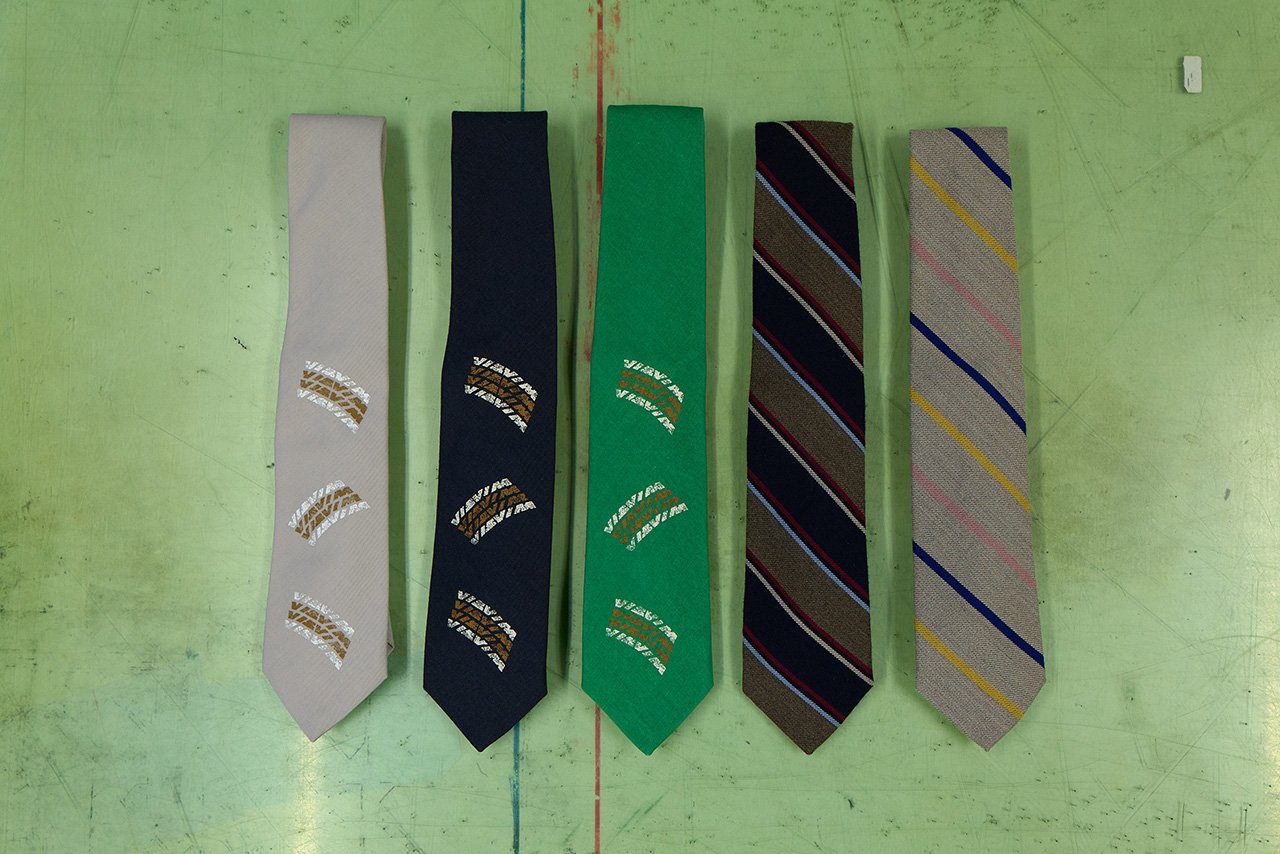
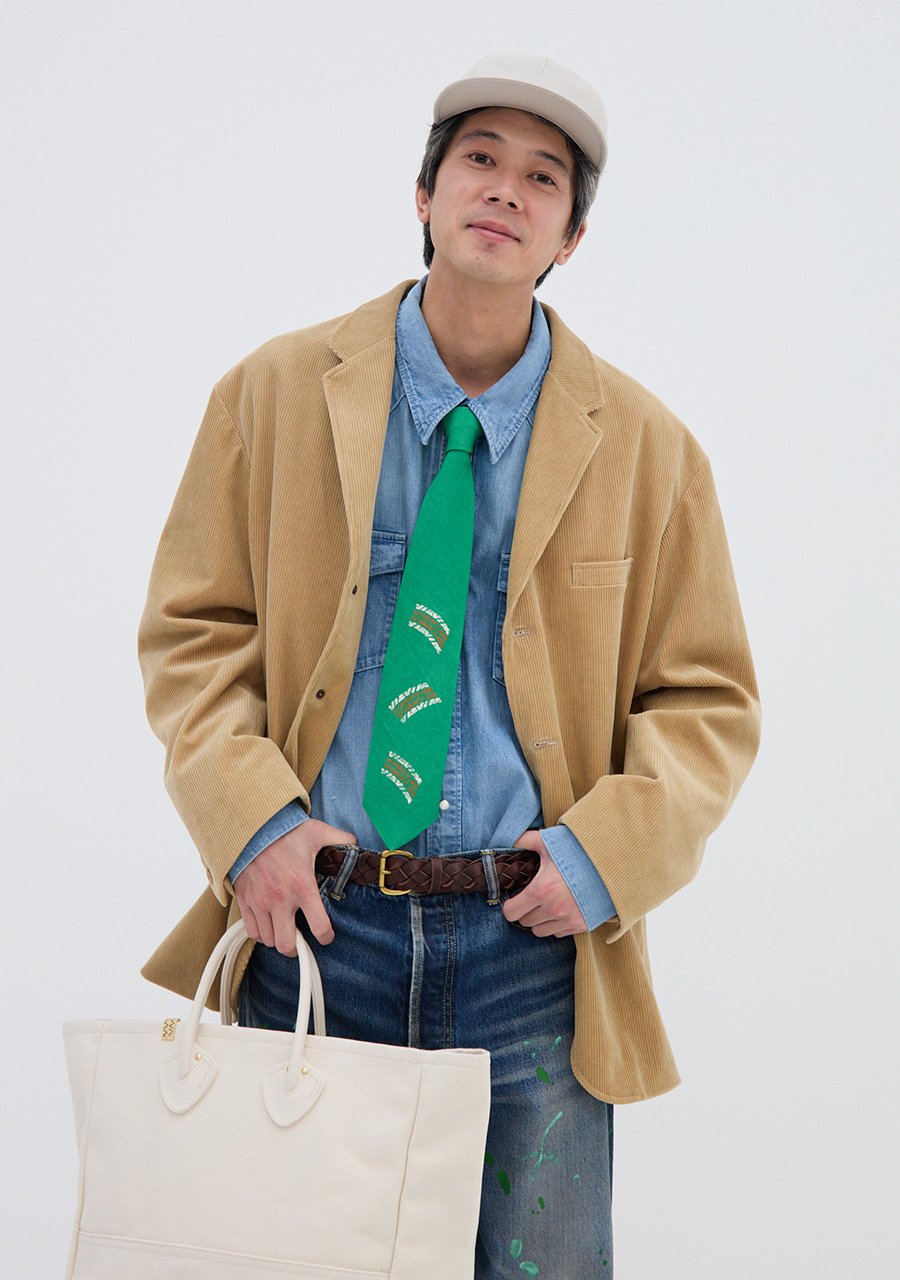
The tie that features an original tire tread print is made with a wool linen gabardine fabric that possesses a dry textured hand, which evokes the feeling of a material that has aged with time. The tie that features a left ascending stripe pattern, emblematic of Traditional American Style is made with a washed wool silk jacquard fabric that is characterized by its soft, textured finish that presents a rugged aesthetic expression.
At every stage of the process these craftspeople move swiftly where their actions may appear to be effortless, however the precision of their work is exceptional and a testament to the seasoned skills that have been honed over the years of refining their craft. In recent years though the demand for ties has declined due to changes in our weather and lifestyles. We are also told that domestic manufacturing is becoming difficult due to changes in the production environment that include the factories, manufacturers and machinery. The advanced techniques required for making ties that include highly specialized skills which are not cultivated very easily happen to still live on here where they continue to be handed down to those next in line.
Text: Kosuke Ide
Photo: Keisuke Fukamizu

Related Posts